Two Centuries, Era by Era
Five eras, nine names and one university, year by year — from the college chartered in 1830 to the Bicentennial in 2030.
The five eras
Nine names, one university
Mountaintop Beginnings
From 1830
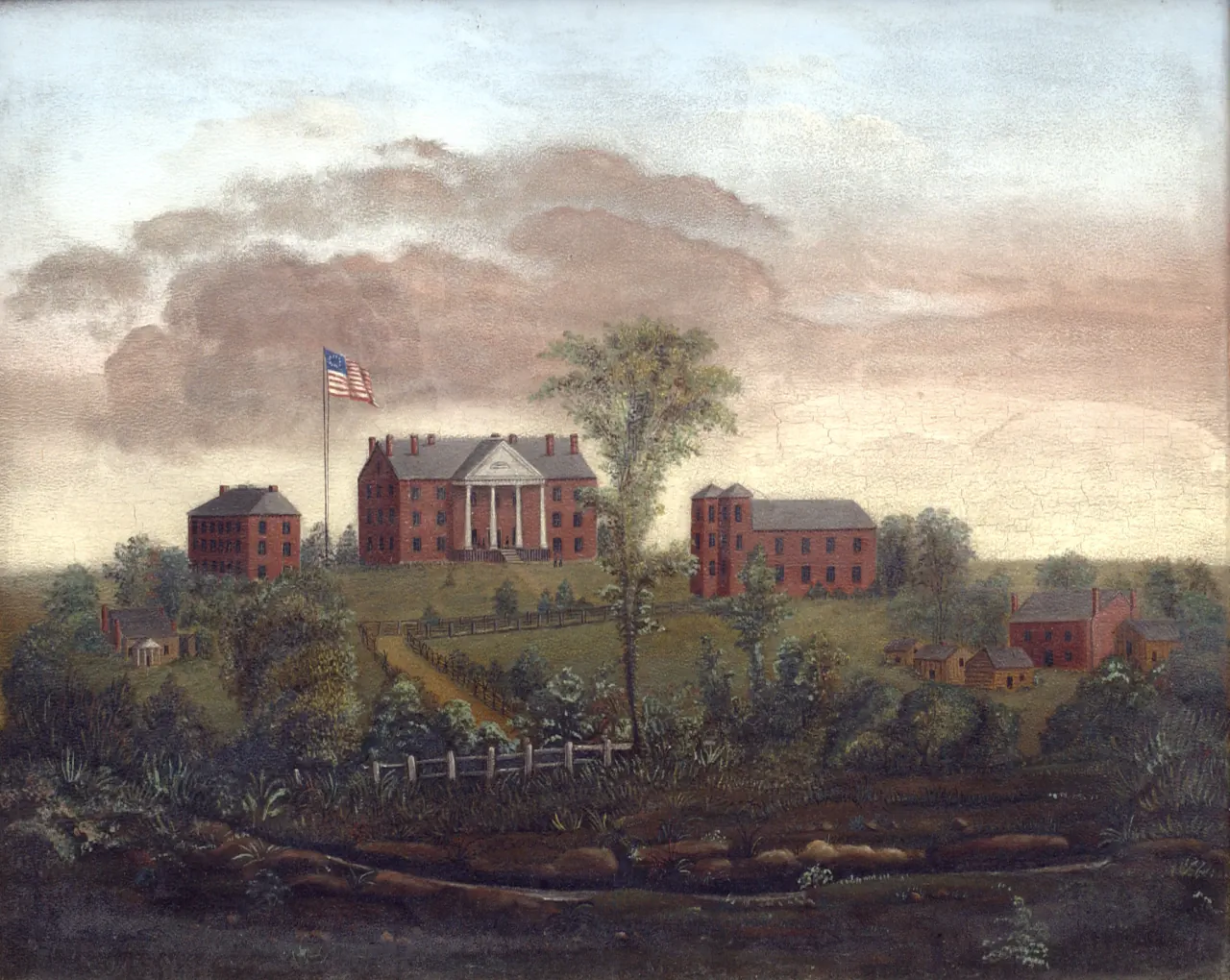
The founding of LaGrange College, the move to Florence as Florence Wesleyan University, and the severe disruptions of the American Civil War.
-
1830
- LaGrange College opens on January 11 with 70 students and 3 faculty members.
- Reverend Robert Paine is appointed the first president of LaGrange College.
- The State Legislature of Alabama charters the school on January 19, making it the first chartered college in Alabama.
-
1846
- President Paine resigns from LaGrange to become a bishop. Dr. Edward Wadsworth is appointed the second president of the college, and also Professor of Mental & Moral Science.
-
1849
- Attendance averages about 106 students a year. Tuition is $25 a session (with an additional $10/month for room, board, and washing).
-
1852
- President Wadsworth resigns to re-enter the ministry. Dr. James W. Hardy, Professor of Chemistry & Mathematics, becomes the third president of the college.
-
1853
- Dr. Hardy dies suddenly in August.
- Dr. Smith W. Moore assumes the presidency as Acting President.
-
1854
- Dr. Richard Henderson Rivers is named the fourth president of the college.
- A session of the Alabama and Memphis Annual Conference votes to move the college to Florence.
-
1855
- In January, LaGrange College moves from Lawrence Hill, Franklin County, Alabama, to Florence. The Dialectical and Lafayette societies move to Florence Wesleyan University as well.
- Classes are held in the Masonic Lodge until Wesleyan Hall is completed, with Dr. Rivers continuing as president.
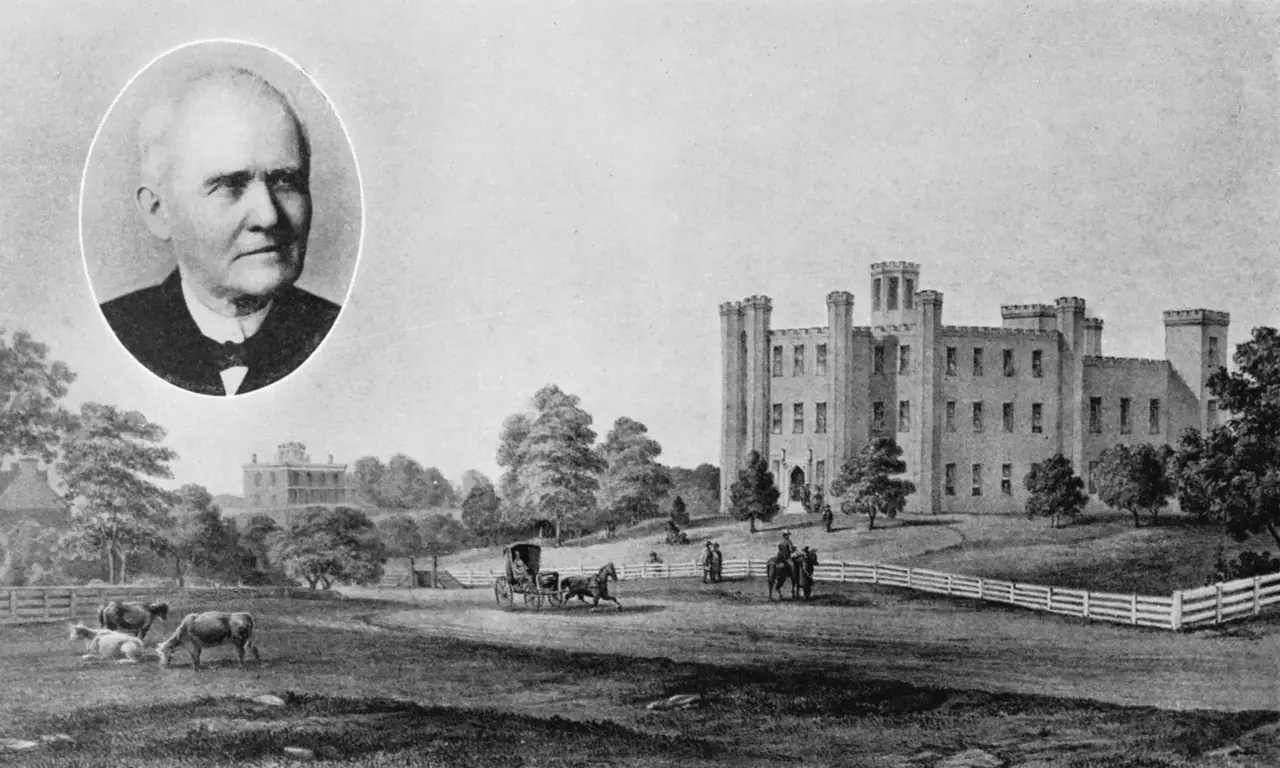
Wesleyan Hall, the college’s home in Florence -
1856
- On February 14, the General Assembly of the Alabama Legislature passes an act to incorporate Florence Wesleyan University.
-
1861
- Commencement services are cancelled at Florence Wesleyan University due to the outbreak of the Civil War.
- President Rivers is appointed president of the Female Department of Centenary Institute at Summerville, Alabama.
-
1862
- Dr. Robert A. Young becomes the fifth president of the university.
- Through the end of the war, President Young and Professor Septimus Rice attempt to keep Florence Wesleyan University open. At the same time, both Union & Confederate troops occupy Wesleyan Hall while encamped in Florence.
Reopening the Doors
From 1866
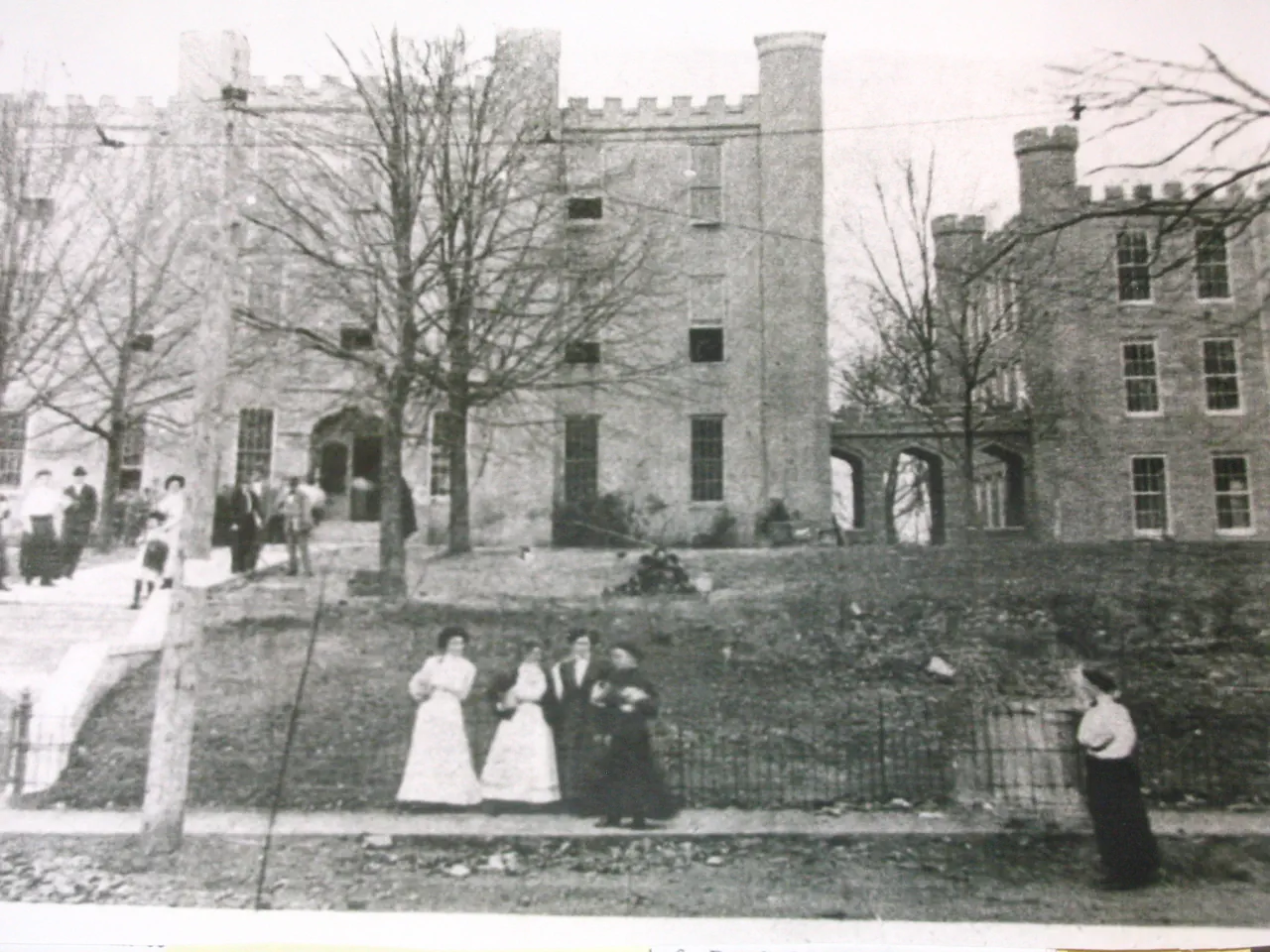
The post-war reopening, the transfer to the State, one of the first co-educational teacher-training schools in the country, and the first buildings beyond Wesleyan Hall.
-
1866
- Florence Wesleyan University closes for two years. President Young has accepted a new position at Vanderbilt University, which leaves the college without a president.
-
1868
- Florence Wesleyan University opens again, and Dr. William Henry Anderson becomes the sixth president of the university.
- The newly formed North Alabama Methodist Conference is added to the sponsorship of the college.
-
1871
- The Methodist Conference determines it can no longer maintain Florence Wesleyan University, and offers the property to the state for a normal school, the State then being bound for its upkeep and maintenance. The offer is accepted.
-
1872
- The General Assembly of the Alabama Legislature charters State Normal School at Florence. The college becomes the first state-supported normal school south of the Ohio River.
- An amended act to the charter of State Normal School at Florence is approved, extending admission to (white) women.
- Dr. Septimus Primus Rice is appointed the seventh president of the college.
-
1873
- State Normal School at Florence opens its doors in September.
-
1874
- Thirty-one female students enroll, making State Normal School at Florence the first coeducational teacher-training institute in the U.S.
-
1875
- By the middle of the decade, the student population is around 126.
-
1877
- The first graduating class at State Normal School at Florence includes three women and one man: Miss Susie Jones (Mrs. Susan J. Price), Miss Mary P. Jones, Miss Mary E. Rice, and Perry P. Anderson.
-
1879
- The college is organized into departments:
- Department of Mental & Moral Sciences
- Department of Greek & Latin
- Department of Mathematics
- Department of English & Literature
- Department of Natural Science
- Department of Vocal & Instrumental Music
- Preparatory Department
- The first women are appointed to the faculty: Mrs. Susan J. Price, Mrs. Alice Jones, and Miss Janie Thompson.
- The college is organized into departments:
-
1881
- President Rice resigns and Dr. Hardie A. Brown becomes the eighth president of the college.
-
1882
- The Alumni Association is established, at the proposal of alumnus Atkinson Home.
- The student population is 184.
-
1884
- The student population increases to 224.
-
1885
- President Brown resigns and Dr. James Abram Heard becomes the ninth president of the college.
- The Model Training School is established as a separate, but related unit of the institution.
-
1886
- President Heard resigns and Dr. T. J. Mitchell becomes the tenth president of the college.
-
1887
- Dr. James Knox Powers becomes the eleventh president of the college.
- The name of the institution is changed to State Normal College.
- The charter of the college is altered to provide for a local Board of Directors appointed by the governor.
-
1889
- The Elizabeth Browning Society is formed.
-
1897
- President Powers resigns to become president of the University of Alabama. Marshall C. Wilson becomes the twelfth president of the college.
- The library located in Wesleyan Hall consists of around 2,000 volumes and magazines.
-
1899
- The Dixie Literary Society is formed.
-
1906
- Glee clubs and athletic associations are first noted in the school catalog, and French and German are added to the curriculum as “modern languages” alternatives to Latin.
-
1908
- A regular librarian is employed.
-
1909
- Wesleyan Annex is completed, the second structure on campus.
- The faculty begins publishing the Florence Normal Quarterly, which runs until 1911.
-
1910
- The College Seal is adopted by the faculty: “Veritas Lux Orbis Terrarum” — Truth is the Light of the World.
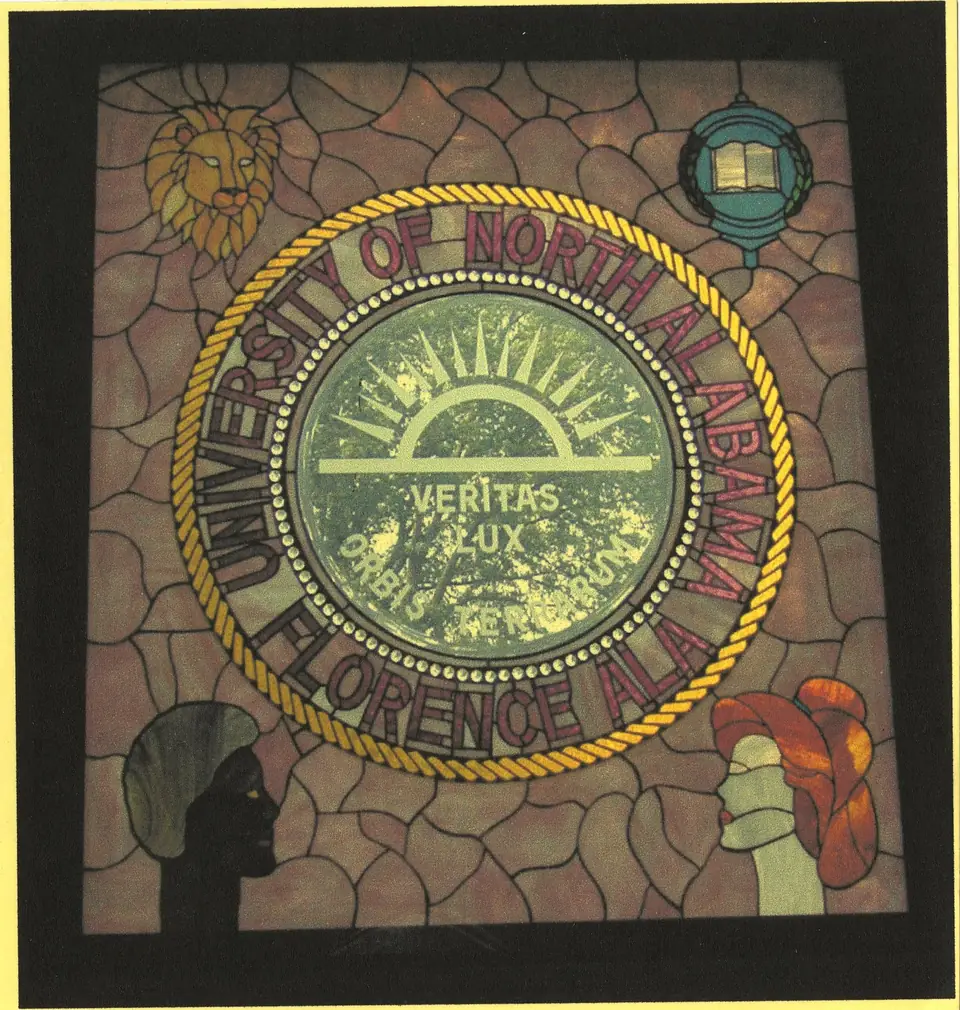
The 1910 motto in a later stained-glass window of the seal -
1911
- President Wilson resigns and Dr. James Knox Powers is again appointed president, becoming the thirteenth president of the college.
- The school is placed under the control of the State Board of Education.
- Athletic teams, football and baseball, are mentioned in the school catalog.
- Construction begins on the third campus building, a women’s dormitory.
-
1912
- The college purchases an additional 8 acres of land, bringing its total to 16.
- The school catalogue notes that arrangements have been made for football & baseball fields and a running track.
-
1913
- The institution changes its name to State Normal School.
- President Powers dies in August, and Mr. Robert Harrison, head of the mathematics department, is made Acting President.
- Dr. Henry J. Willingham assumes the president’s office in November, becoming the fourteenth president of the college.
- The first yearbook, Purple & Gold, is published.
-
1915
- Enrollment rises above 600.
-
1916
- A summer quarter is added to the college calendar, becoming the first full term summer school to be offered by any educational institution in the state.
-
1917
- Florence & Striplin Halls become the third and fourth buildings added to campus. They are funded and built by the City of Florence, and will be purchased by the college in 1941.
-
1919
- Miss Cora Pearson, principal of the Model Training School, is elected president of the Alabama Education Association. She is the first woman elected to the position.
-
1921
- The fifth building, Kilby Training School, is constructed.
-
1928
- The football program is abandoned.
Building a College Campus Community
From 1929
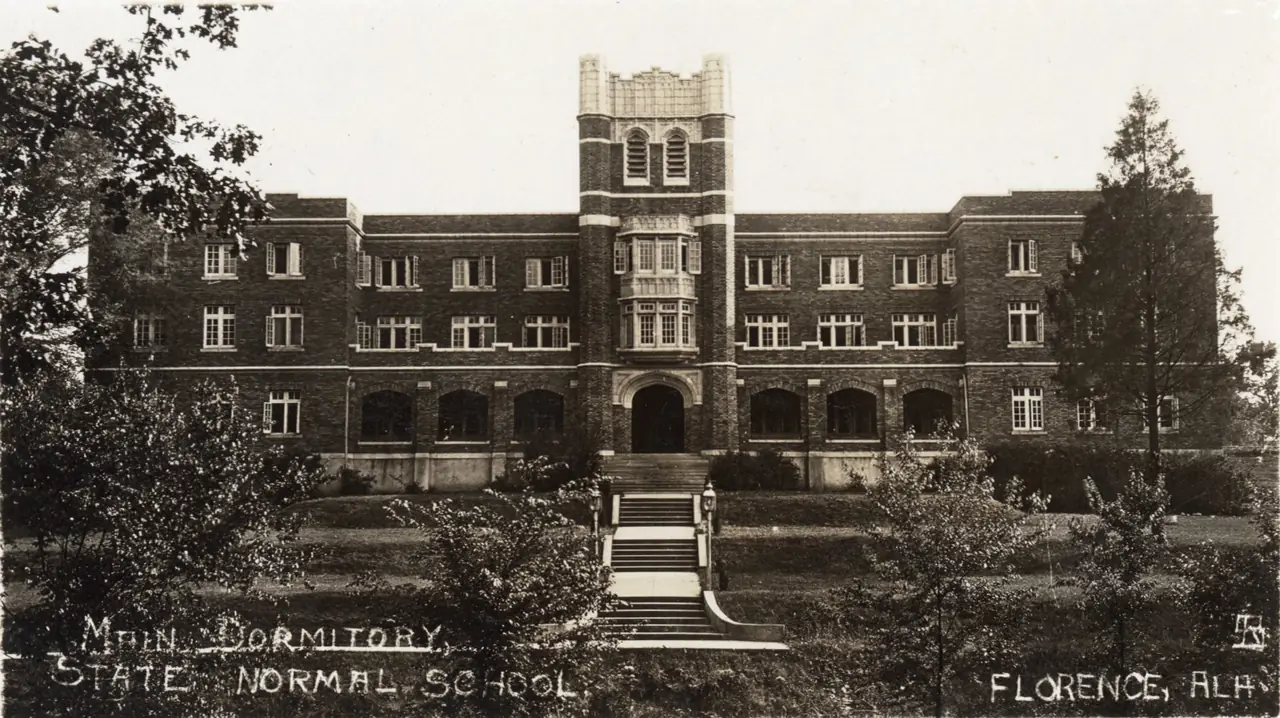
The period when the campus and the community we know today really begin to take shape: a four-year teachers college, new halls rising across the grounds, the first bachelor’s degrees, post-war growth, and Leo the Lion adopted as the emblem of the college.
-
1929
- The name is changed to Florence State Teachers College, offering four years of college work for the training of teachers in elementary education.
- Dr. C. B. Collier is appointed Dean of the College and Miss Sara Harrell is appointed Dean of Women.
- The student population reaches 2,982.
- A new auditorium for Kilby Training School is constructed.
- A central heating plant is also constructed for the college.
- An additional 10 acres of land are purchased for the expansion of the college.
- The new Alma Mater is written by Bess Mary Crider, Professor of English.
- Construction begins on a new administrative and general building, which becomes known as Bibb Graves Hall in 1930.
-
1930
- The Alumni Hall/Women’s Dormitory is renamed O’Neal Hall.
-
1931
- Florence State Teachers College awards its first Bachelor of Science degree.
- The first issue of The Flor-Ala is published.
- The Student Council is established.
-
1932
- Eddie Flowers coaches the first Florence State Teachers College basketball & baseball teams.
-
1934
- The Memorial Amphitheater is completed.
- The Alabama Beta Chapter of Kappa Mu Epsilon (mathematics) is installed, making it the oldest professional society on campus. Later in the year, the Theta Delta Chapter of Sigma Tau Delta (national honorary English society) is established.
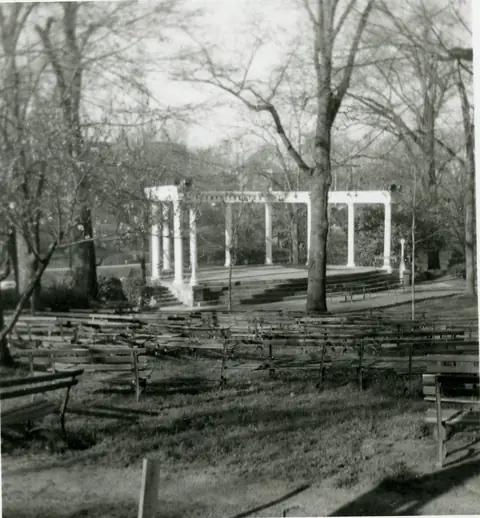
The Memorial Amphitheater, photographed in 1961 -
1936
- The college’s second yearbook, The Panorama, is published.
- Zeta Rho Cast of Alpha Psi Omega, national honorary dramatic society, is established on campus.
-
1937
- President Willingham announces his retirement, effective June 1938.
-
1938
- Dr. James Albert Keller, a 1915 graduate of State Normal School, is appointed the fifteenth president of the college.
-
1939
- Florence State Teachers College begins offering a degree in secondary education.
- Four structures are added to campus: the library (Collier), the Gymnasium, an apartment dormitory for women (Powers Hall), and the first dormitory for men (Willingham Hall).
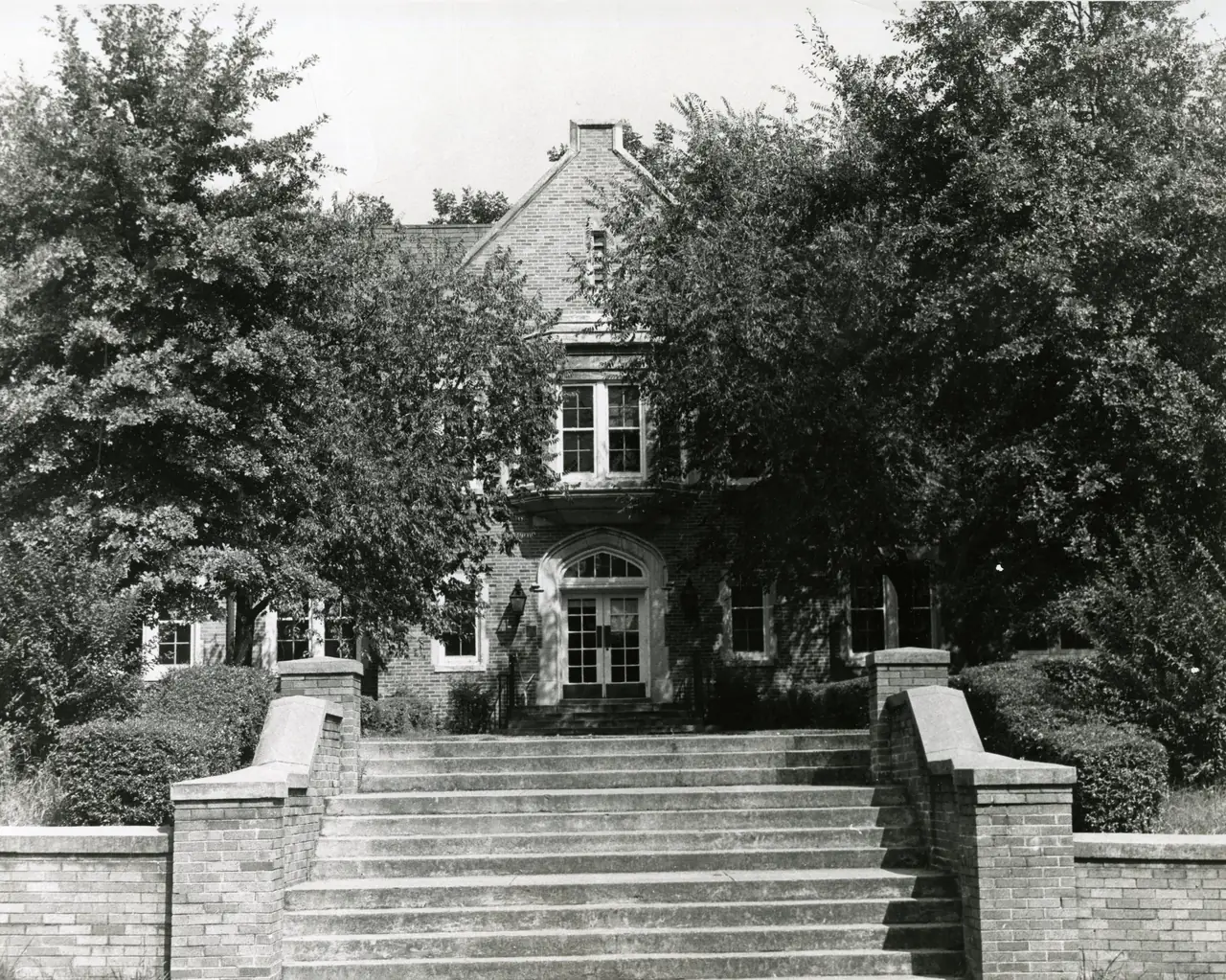
Willingham Hall, the first dormitory for men 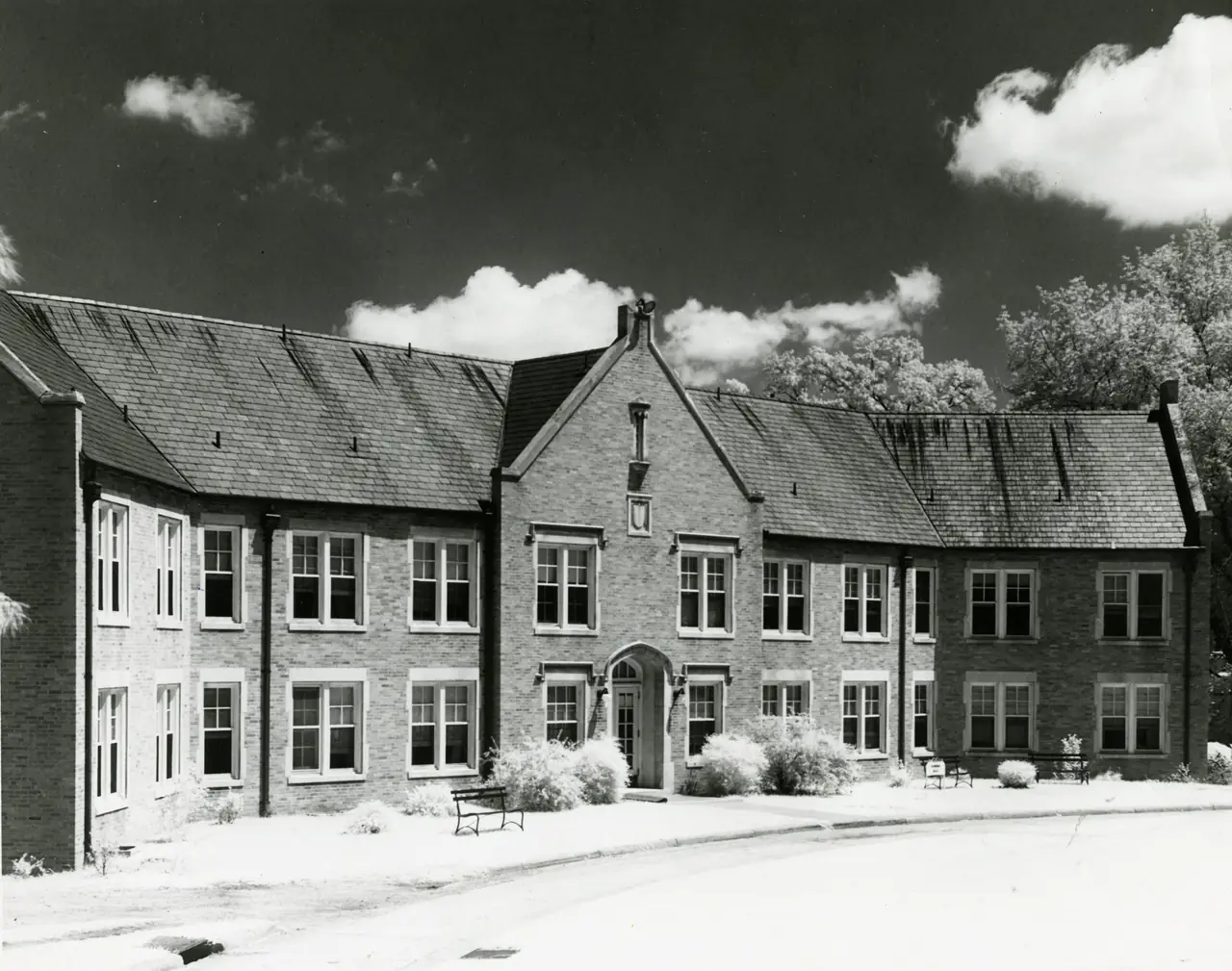
Powers Hall, the apartment dormitory for women -
1940
- The Stone Lodge is completed, built by college students under the supervision of the National Youth Administration.
- The President’s home is built through the Works Progress Administration, becoming the thirteenth building added to campus.
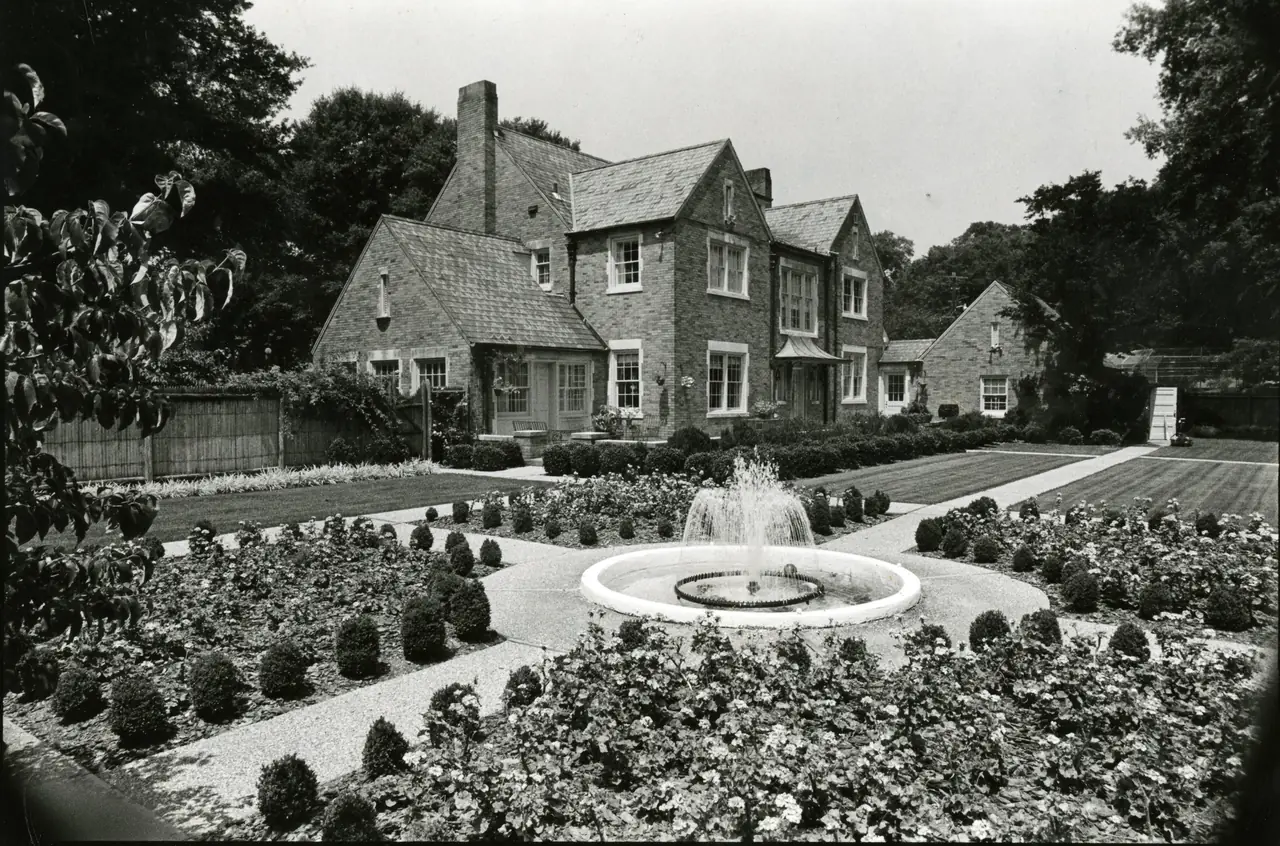
The President’s Home -
1945
- Epsilon Psi Chapter of Kappa Delta Pi, national educational society, forms.
-
1946
- The first married student housing is erected to accommodate veterans and their families, with barracks used for additional student housing.
-
1947
- A new dormitory for men, later named Keller Hall, is constructed.
-
1948
- The college’s third yearbook, The Diorama, is published.
- Courtview is purchased by the college, becoming Rogers Hall.
- During the summer, President and Mrs. Keller are killed in an automobile accident. Dean F. E. Lund serves as Acting President.
- The ROTC project begins on campus.
- Dr. E.B. Norton is chosen as the sixteenth president of the college.
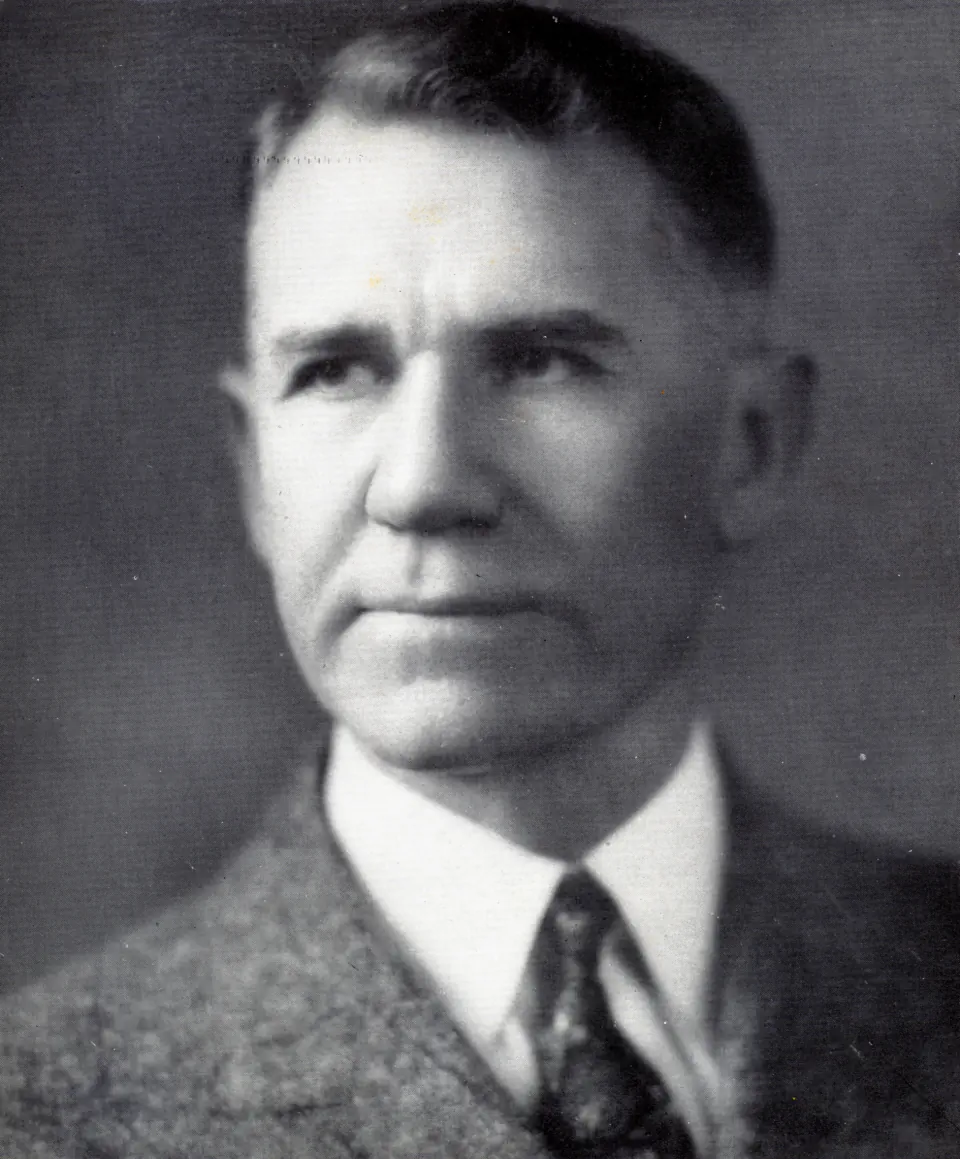
Dr. Keller, president of the college until 1948 -
1949
- The football program is reestablished after a 20-year absence. The first College band is also established, with 23 members, under the direction of Dr. William Presser.
- Leo the Lion is introduced as the emblem of the college in The Diorama.
-
1954
- Harlon Hill is the first All-American football player from the college.
-
1955
- The first issue of the literary magazine Lights & Shadows is published.
-
1956
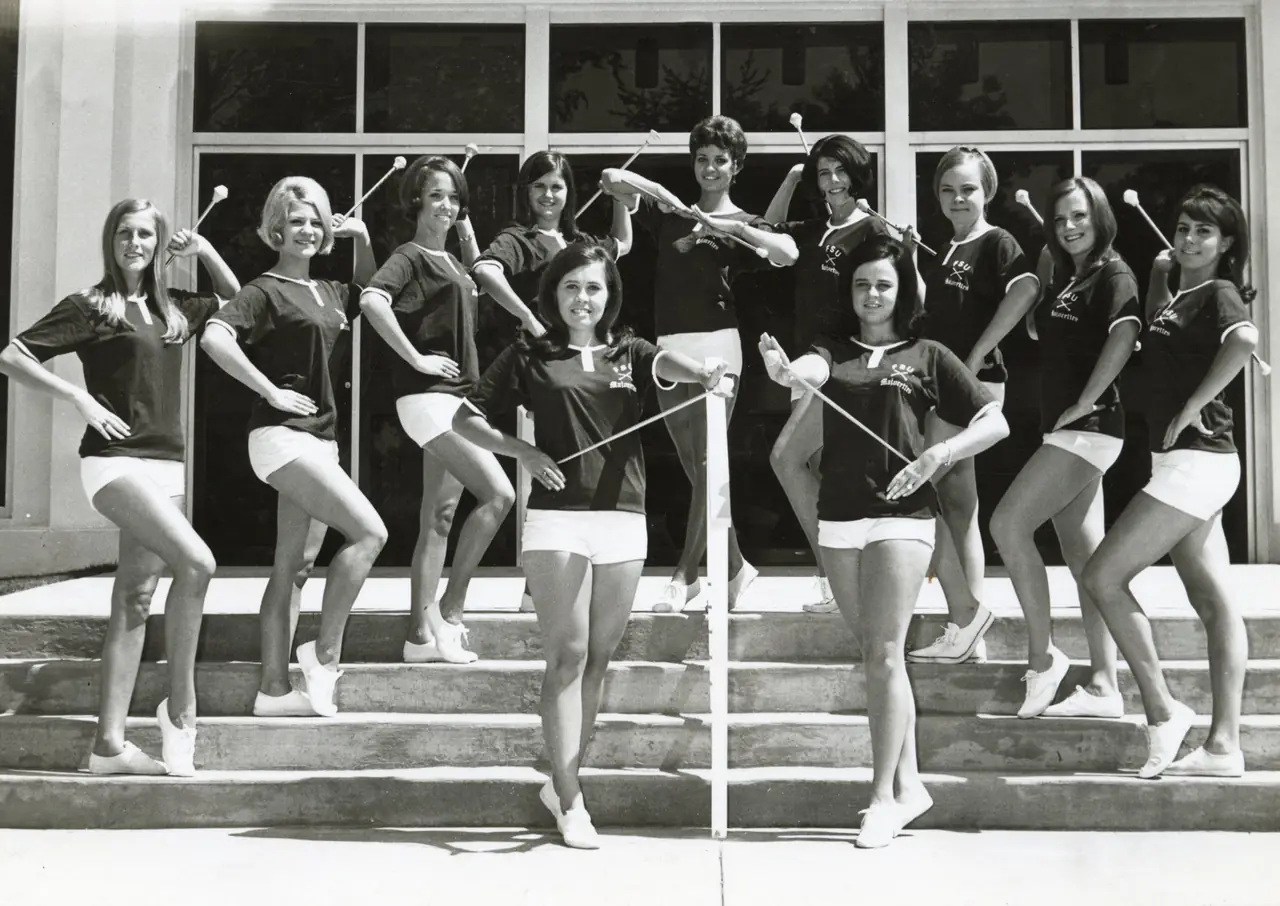
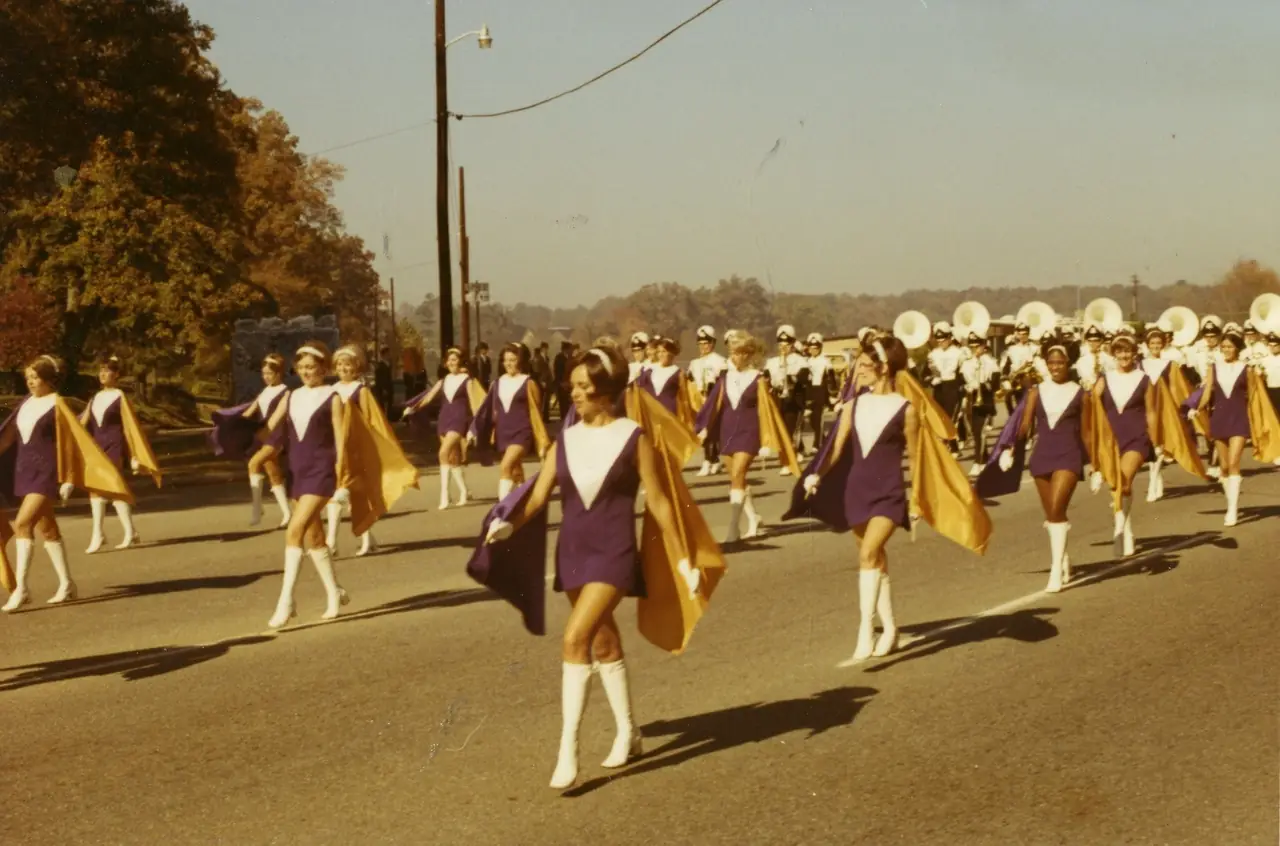
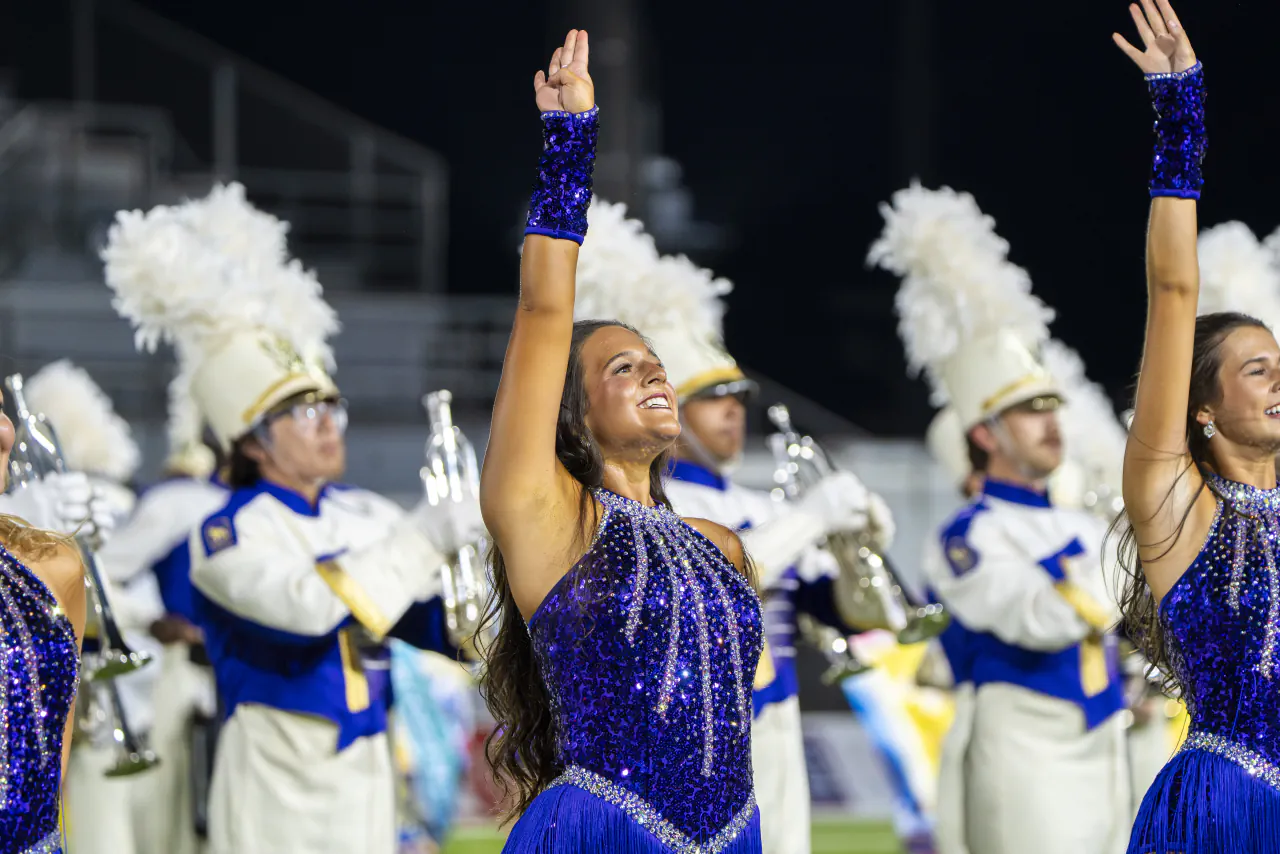
- The Lionettes precision drill team is formed.
Toward Integration & Full University Status
From 1957
Growth into a general state college, the integration of the campus, a decade of building, and full university status.
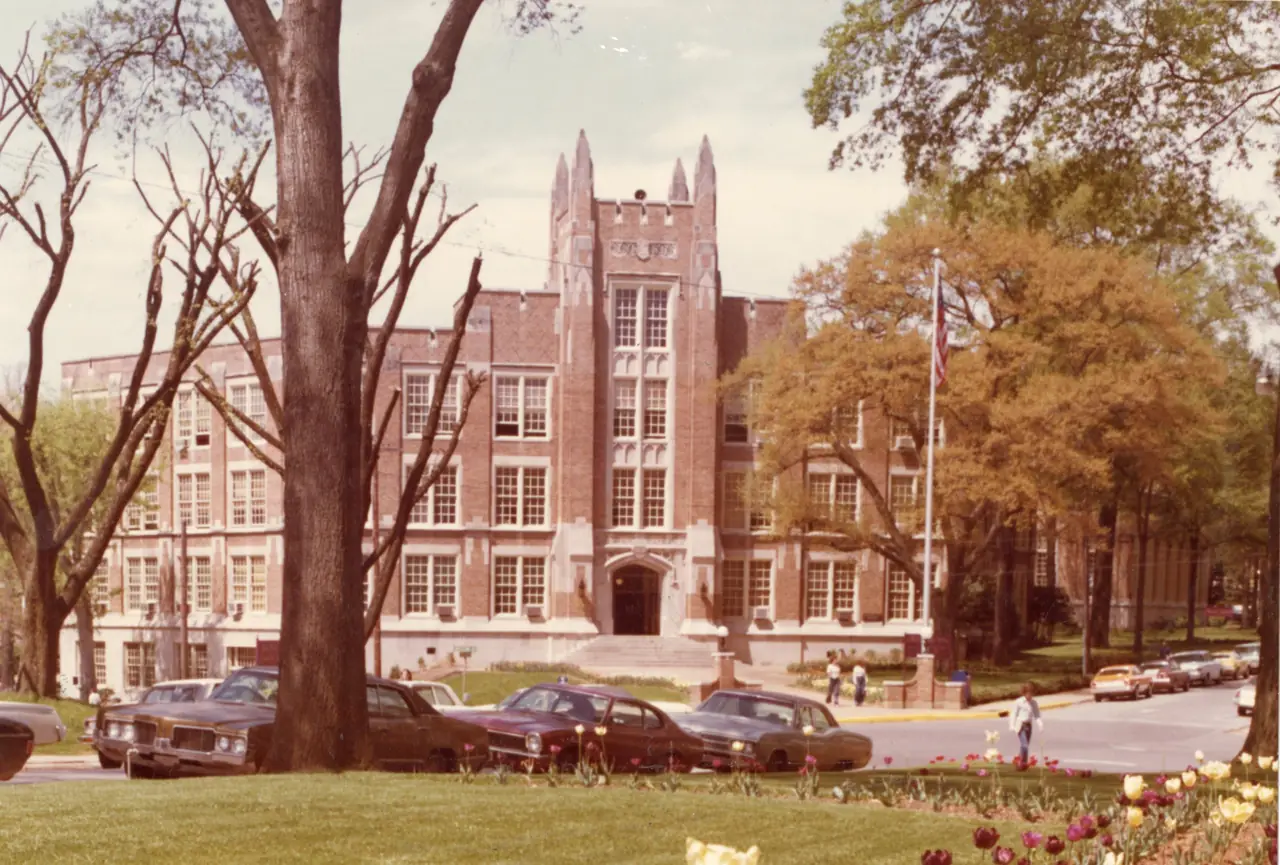
-
1957
- The name of the school is changed to Florence State College.
- A Graduate Division is begun at Florence State College.
-
1958
- The first Master of Arts degree is conferred upon Louise W. Yates.
-
1960
- A massive building program is launched:
- Floyd Science Building
- Lafayette Hall
- LaGrange Hall
- Student Union Building
- The first addition to Collier Library
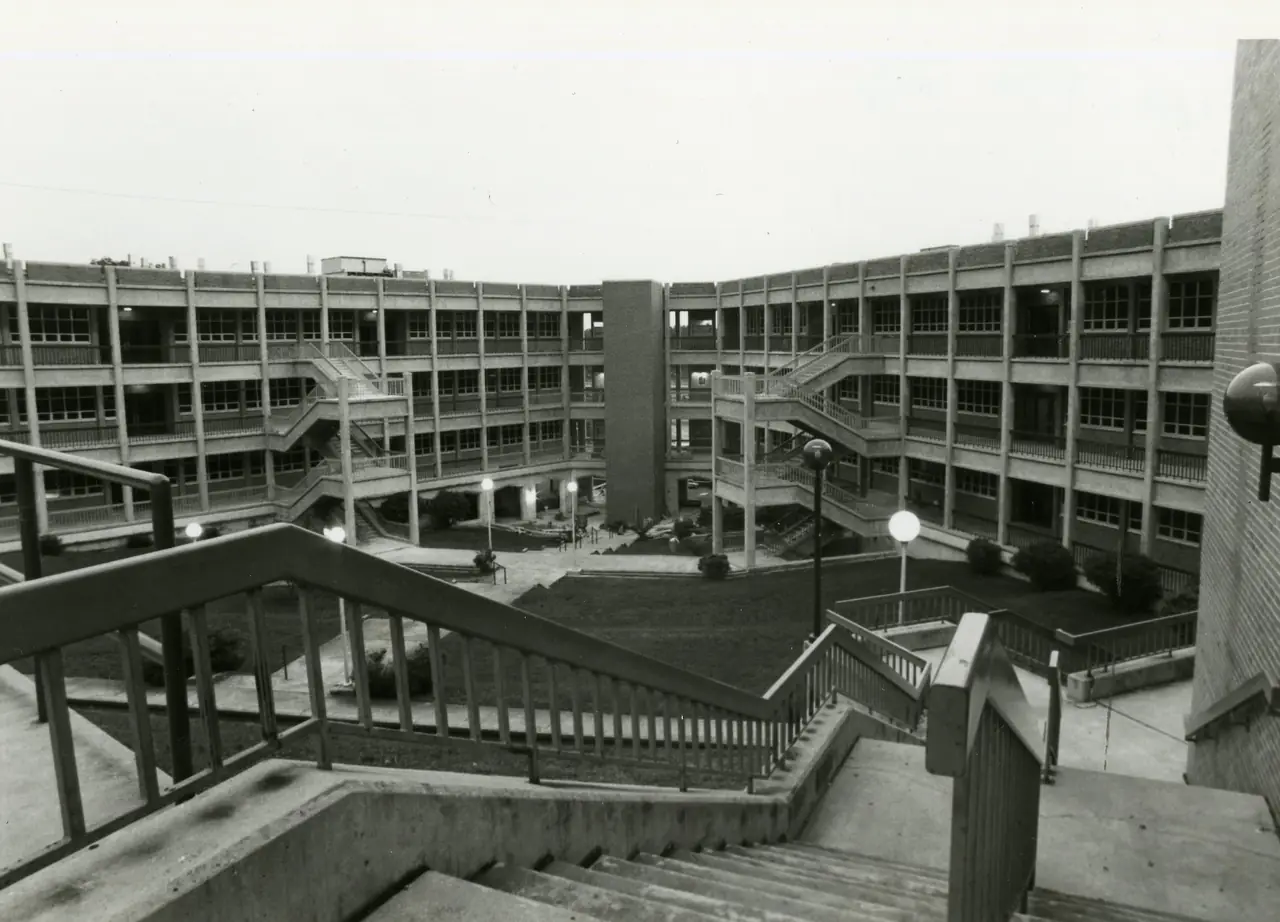
The Floyd Science Building 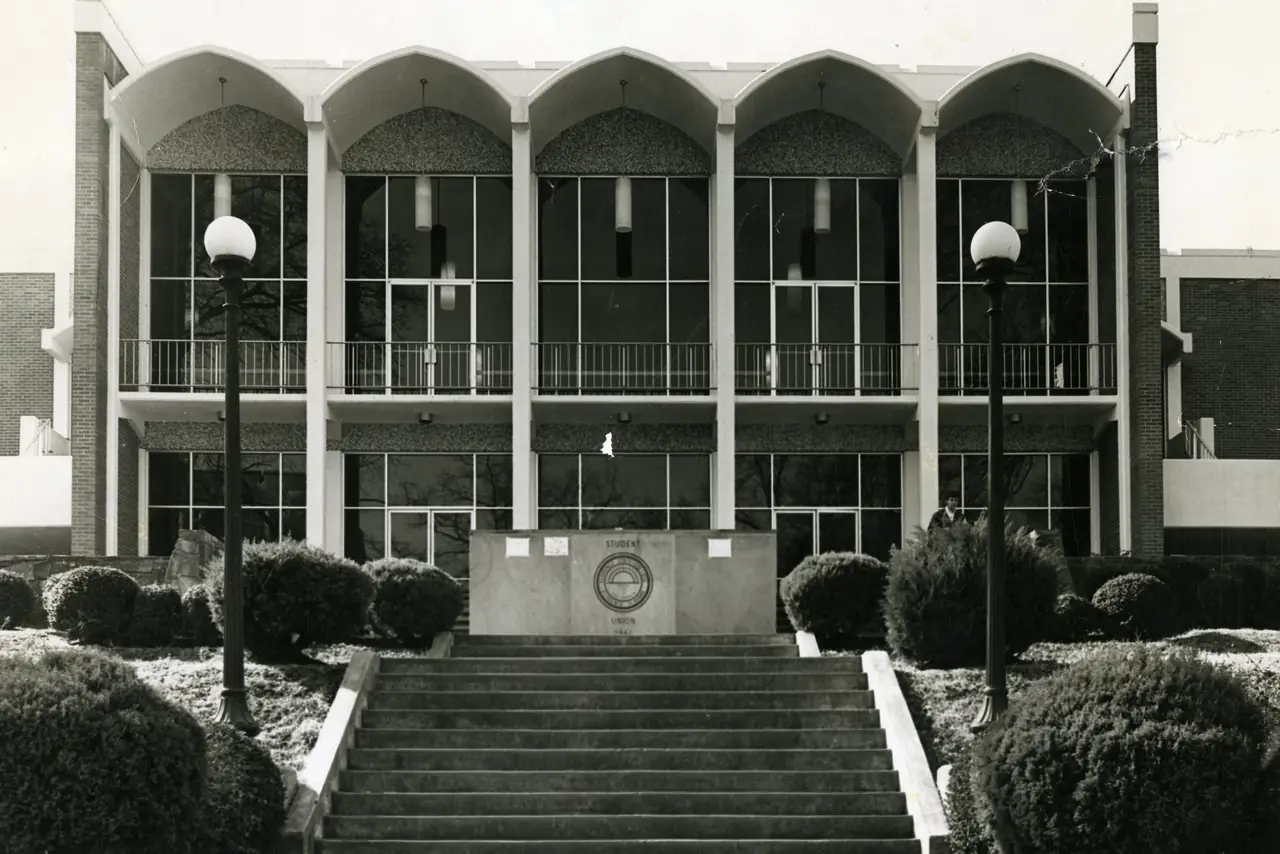
The Student Union Building - A massive building program is launched:
-
1961
- The first Leo impersonator appears.
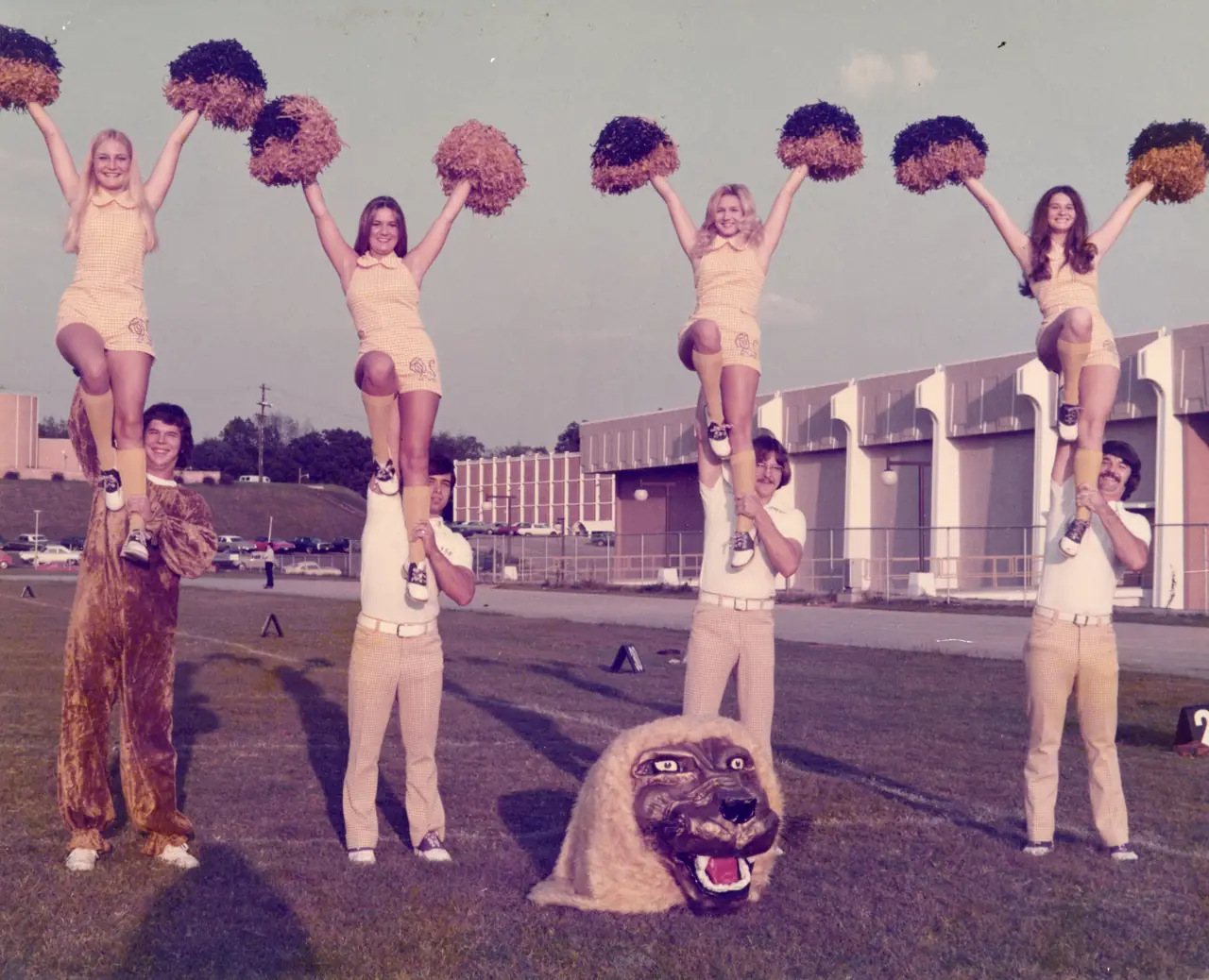
Cheerleaders and a costumed Leo -
1963
- Wendell Gunn becomes the first African American student admitted to the college.
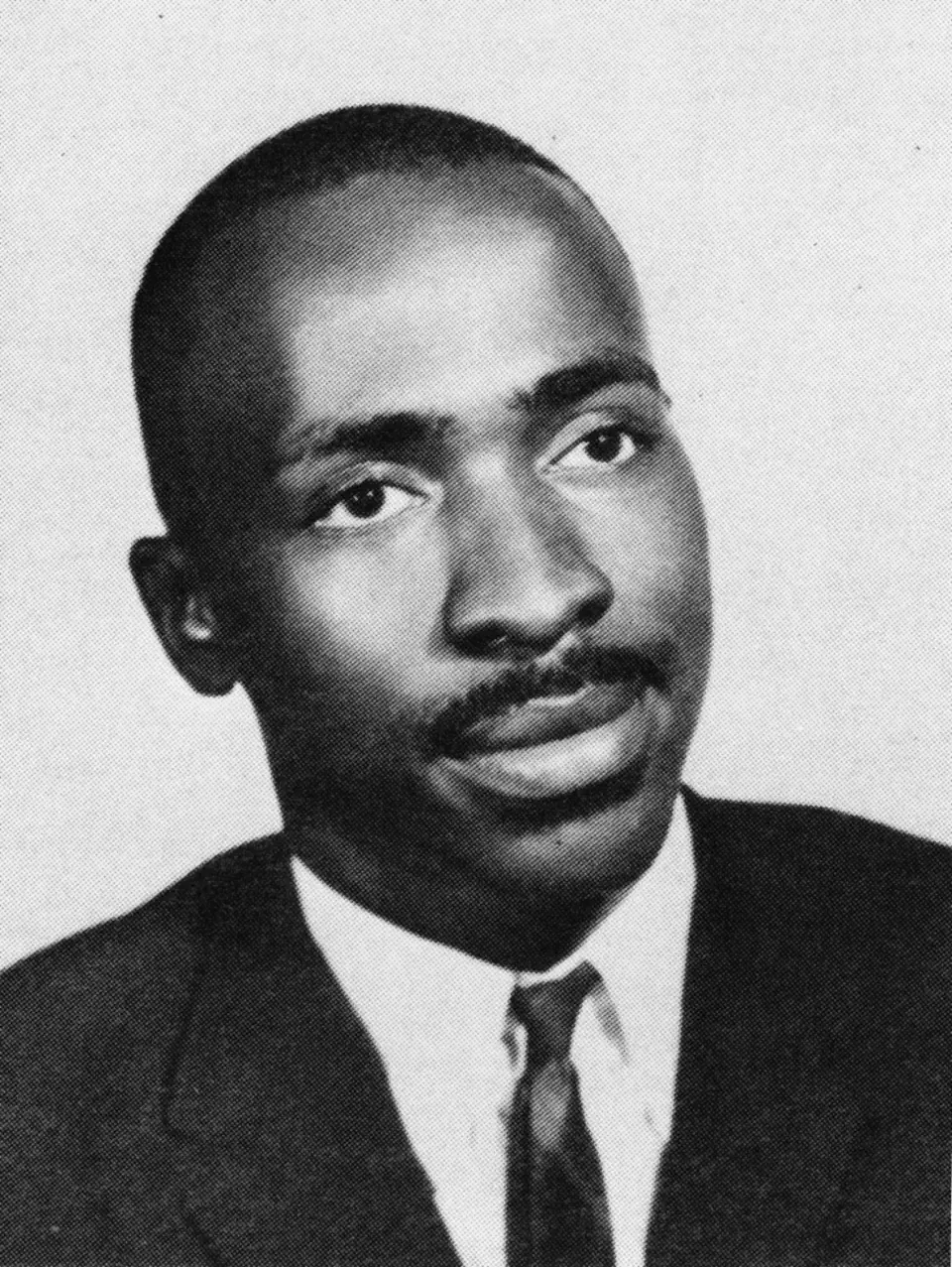
Wendell Gunn as a student -
1964
- The Kilby School is completed along Pine Street.
-
1967
- The school is placed under a Board of Trustees by state legislative action.
- 30 additional acres are added to campus under the Urban Renewal project.
- Several more campus buildings are completed:
- Rice Hall
- Rivers Hall
- Towers Cafeteria
- Planetarium/Observatory
- Greenhouse
-
1968
- The first Mid-Year commencement is held in January.
- The Board of Trustees votes to change the name of the college to Florence State University.
-
1969
- The Lurleen B. Wall Fine Arts Center is completed.
- The first volleyball team is fielded as an extramural program.
-
1970
- Bennett Infirmary opens.
-
1971
- The school chapter of Phi Kappa Phi Honor Society is installed.
-
1972
- President Norton retires.
- Robert M. Guillot becomes the seventeenth president of the university.
- Flowers Hall is opened with an exhibition game between the Boston Celtics and the Atlanta Hawks.
- The Greek system is established, growing to 8 national fraternities and 4 national sororities over the next two years.
- The first women enroll in the ROTC.
-
1973
- The School of Nursing opens with 3 faculty members and 135 students.
- The university is now organized into five academic schools:
- School of Arts & Sciences
- School of Business
- School of Education
- School of Nursing
- School of Graduate Studies
- The Office of Student Life replaces the offices of Dean of Men and Dean of Women.
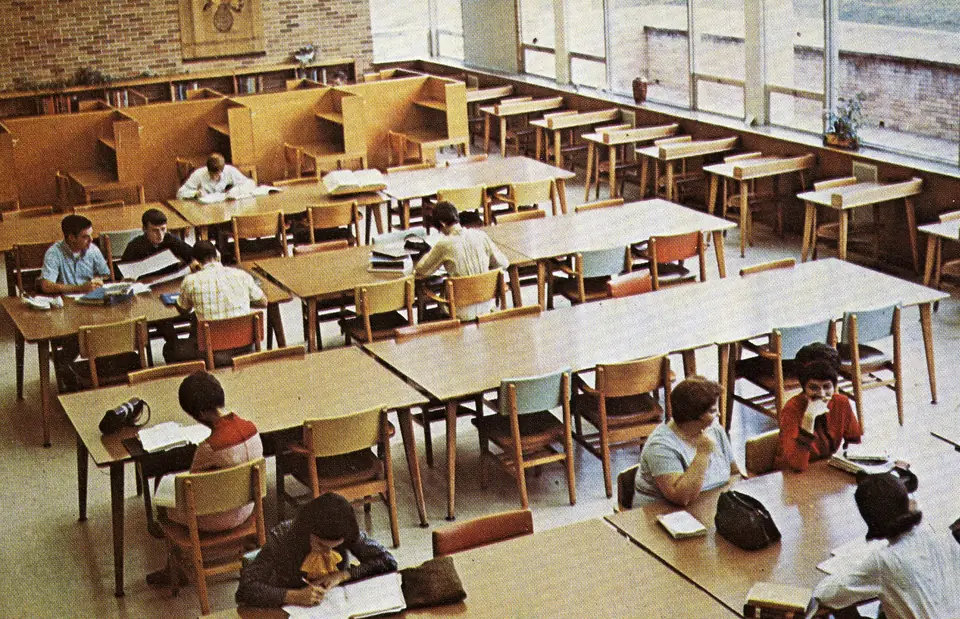
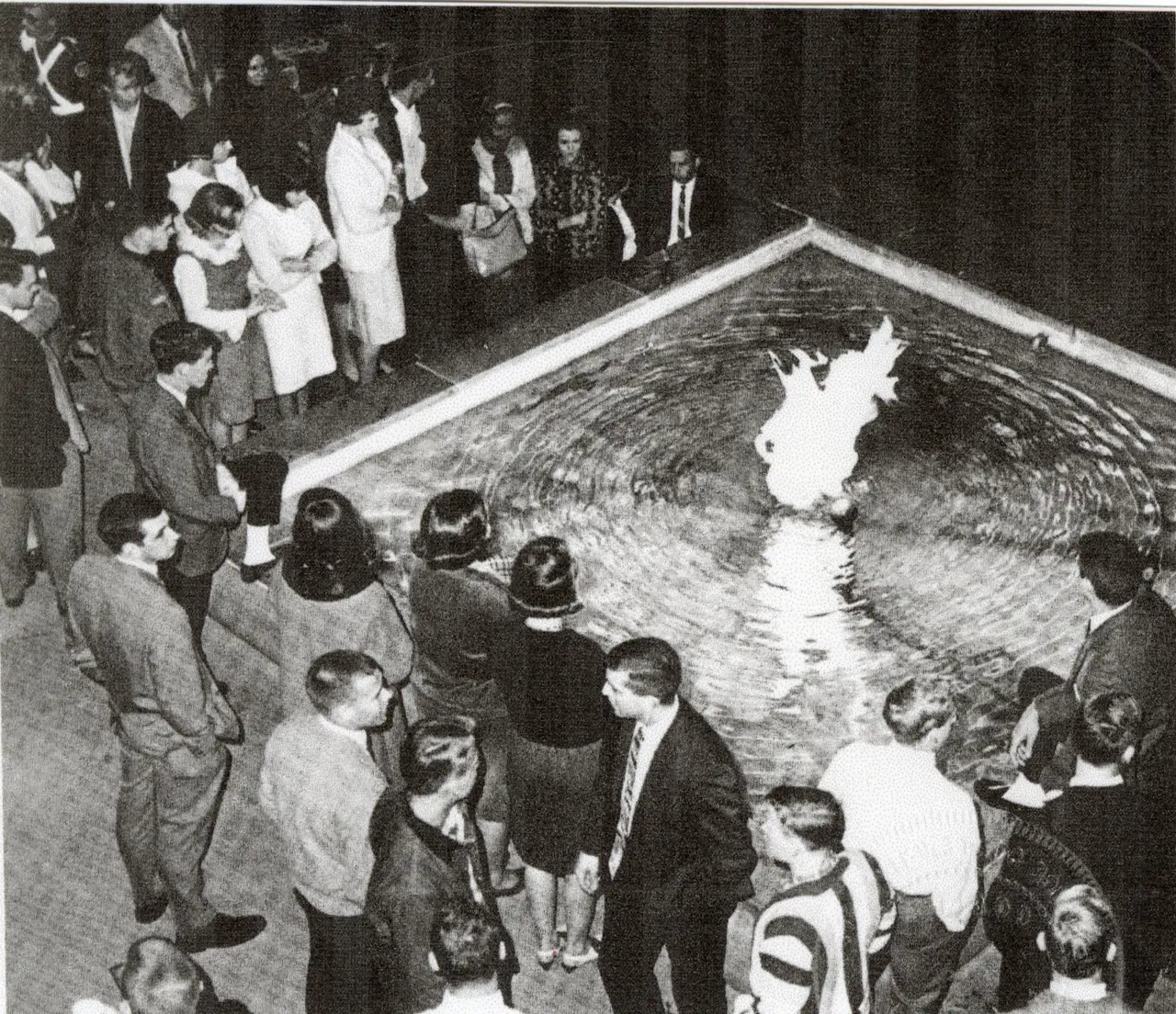
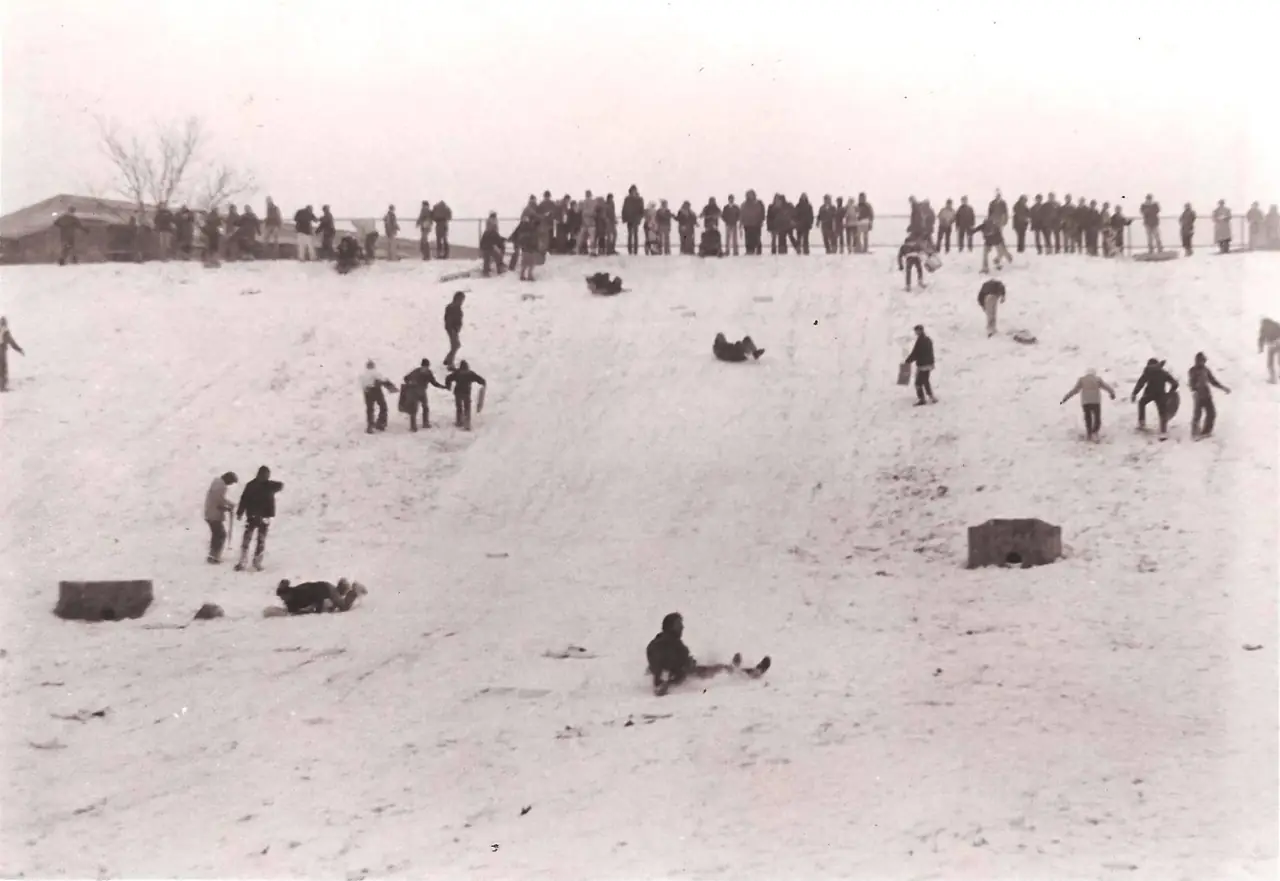
Campus life
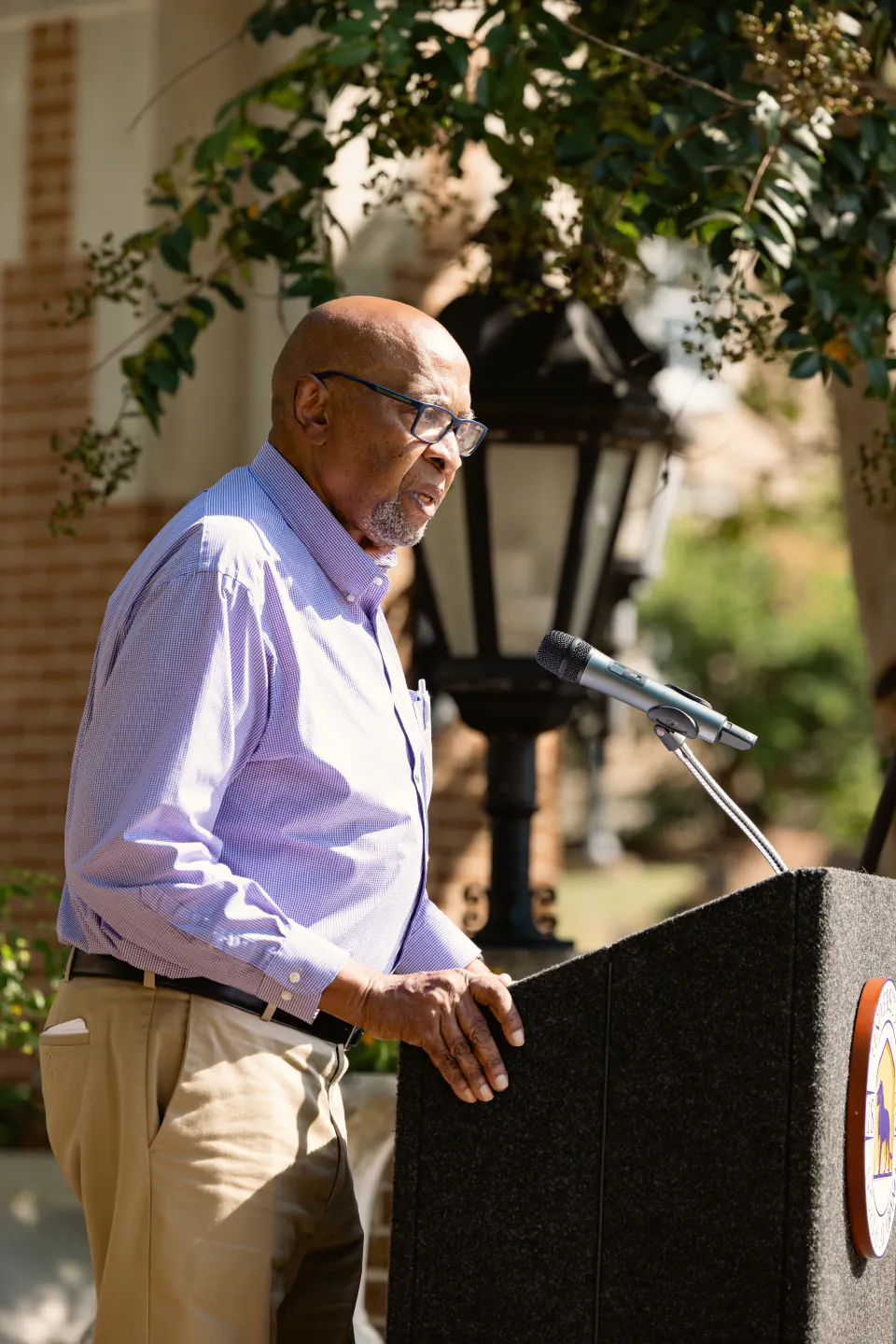
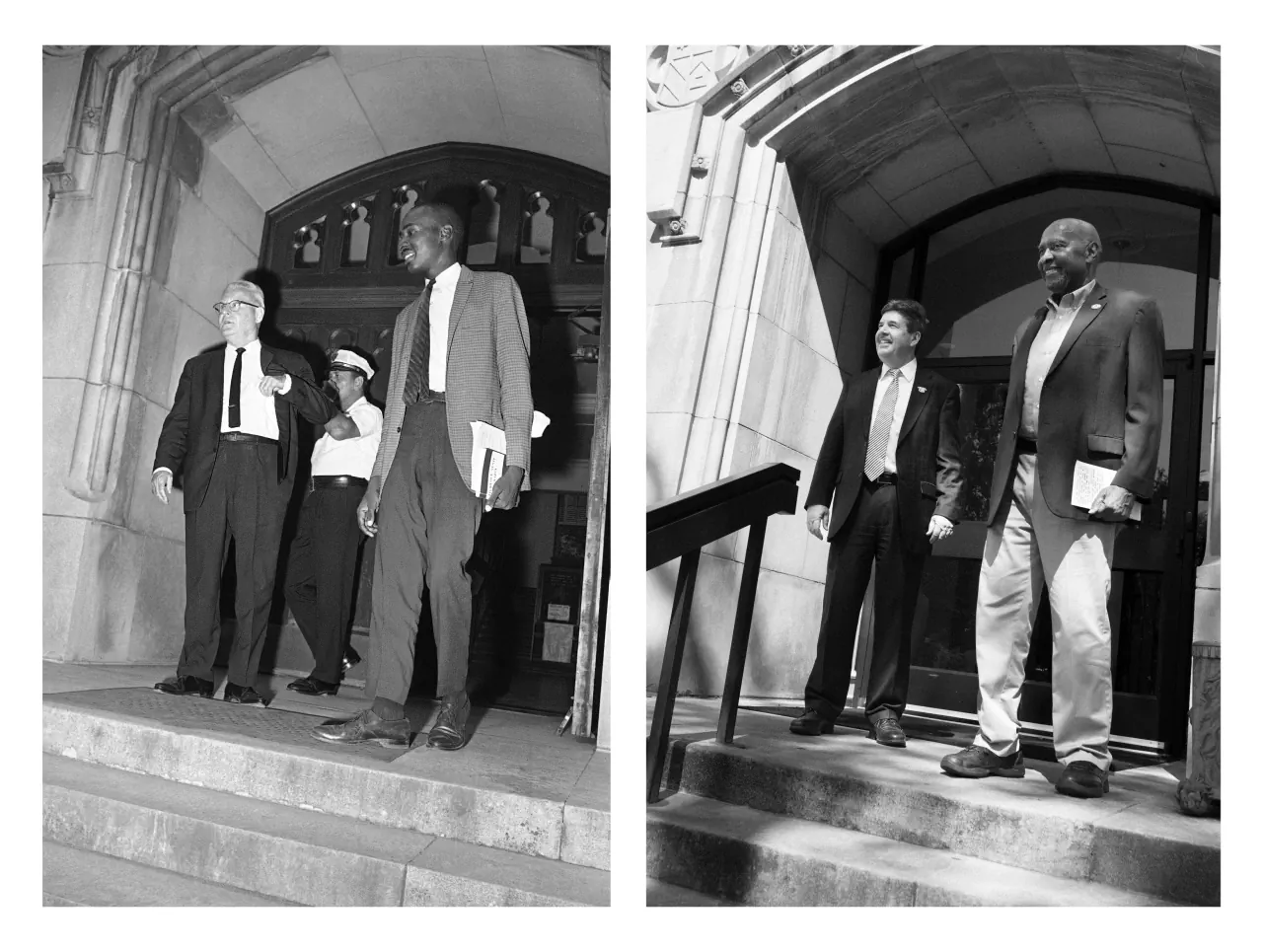
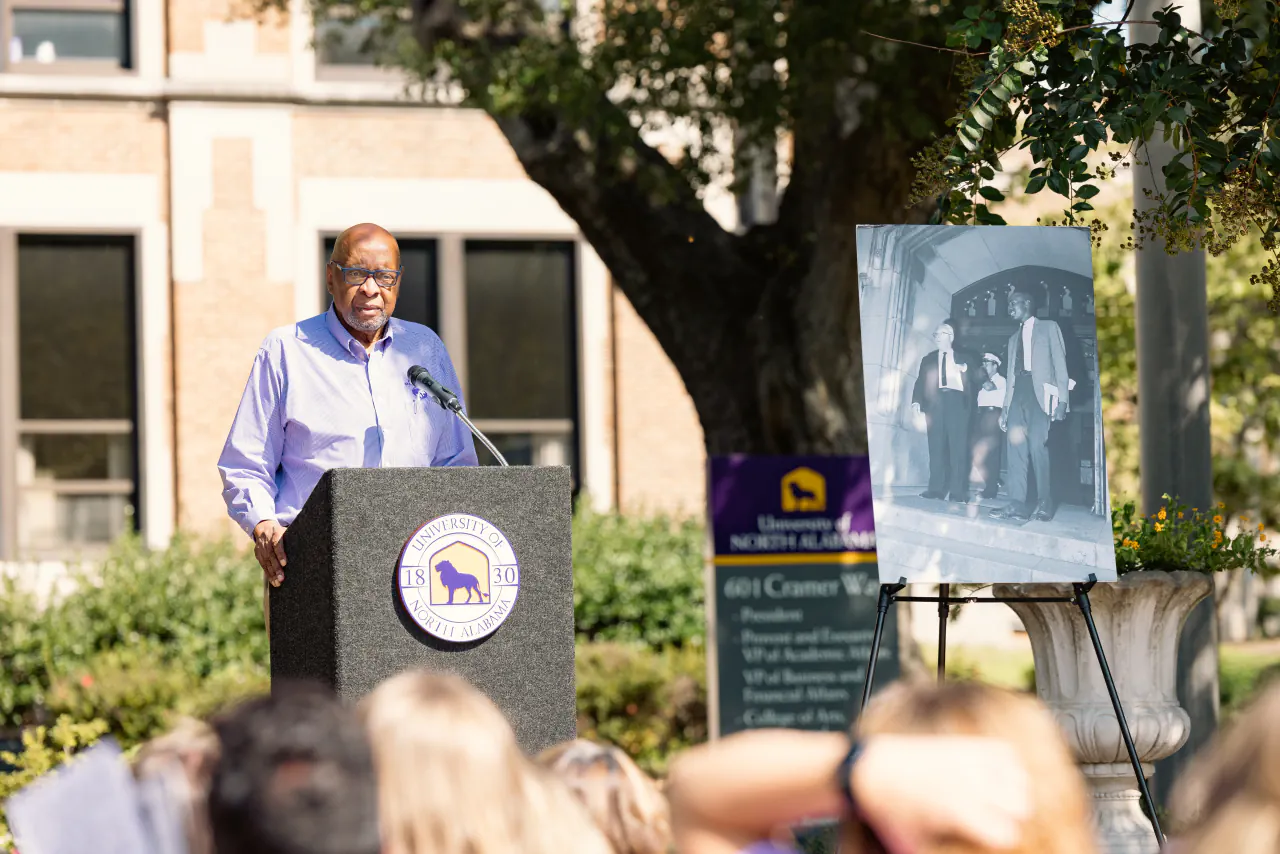
Wendell Gunn
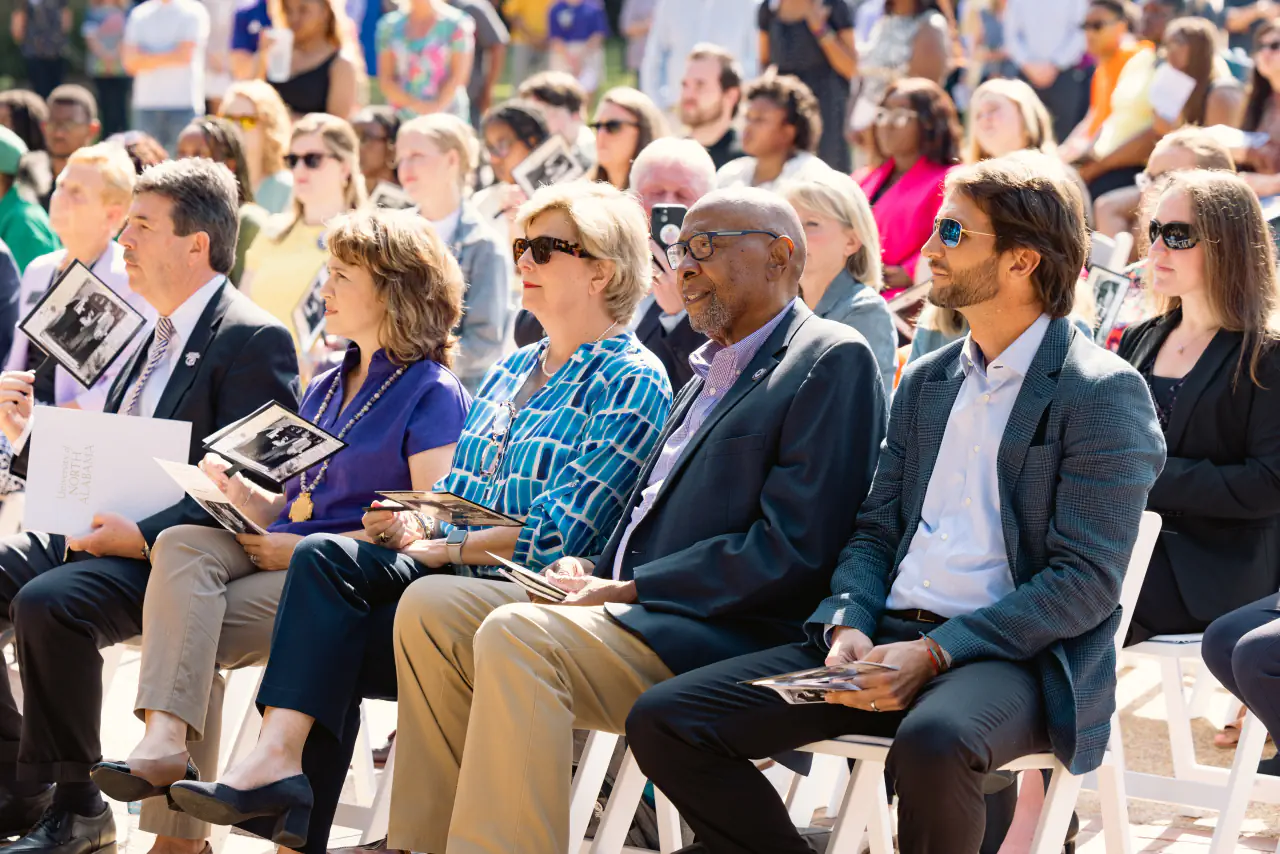
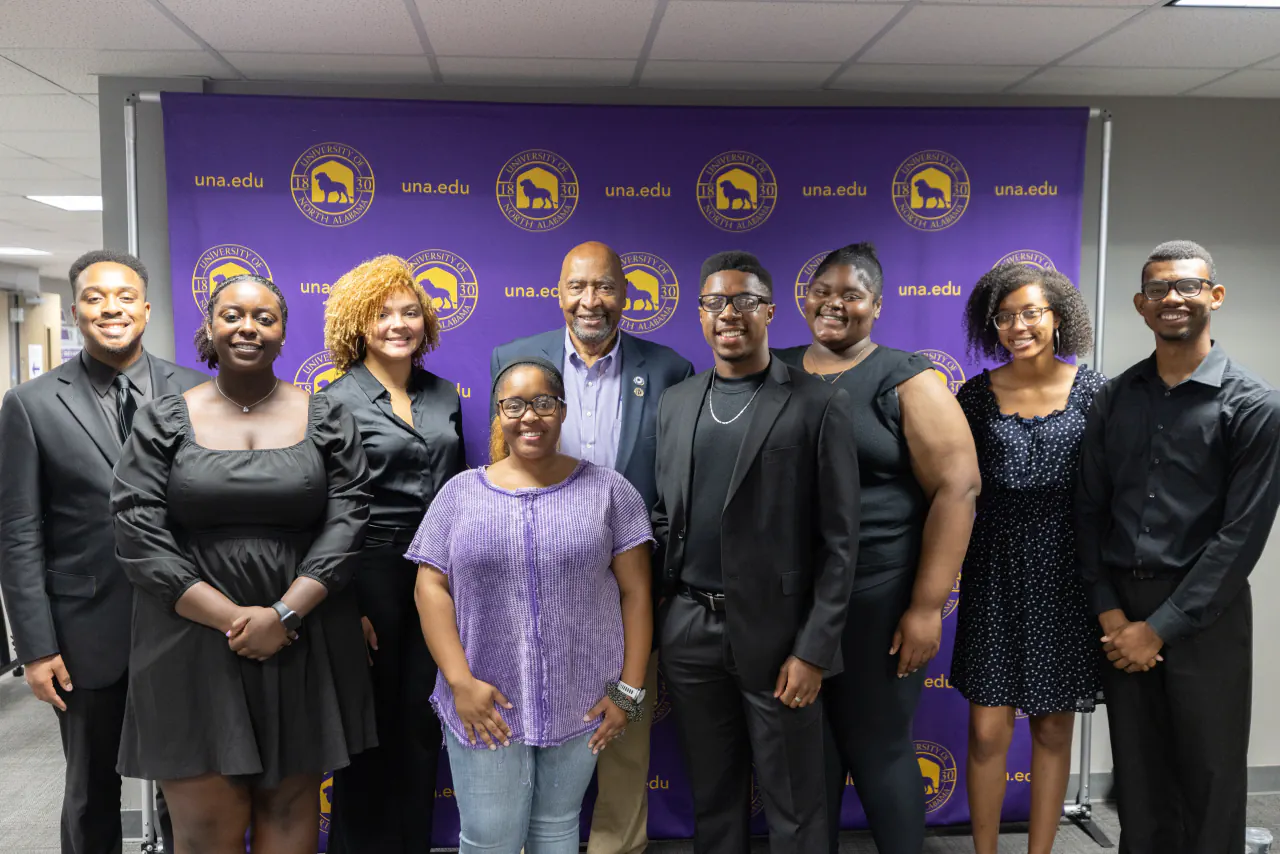
In 1963 Wendell Wilkie Gunn became the first African American student to enroll at what was then Florence State College. Sixty years later the University marked the anniversary with Wendellfest, and he walked back out of the same door.
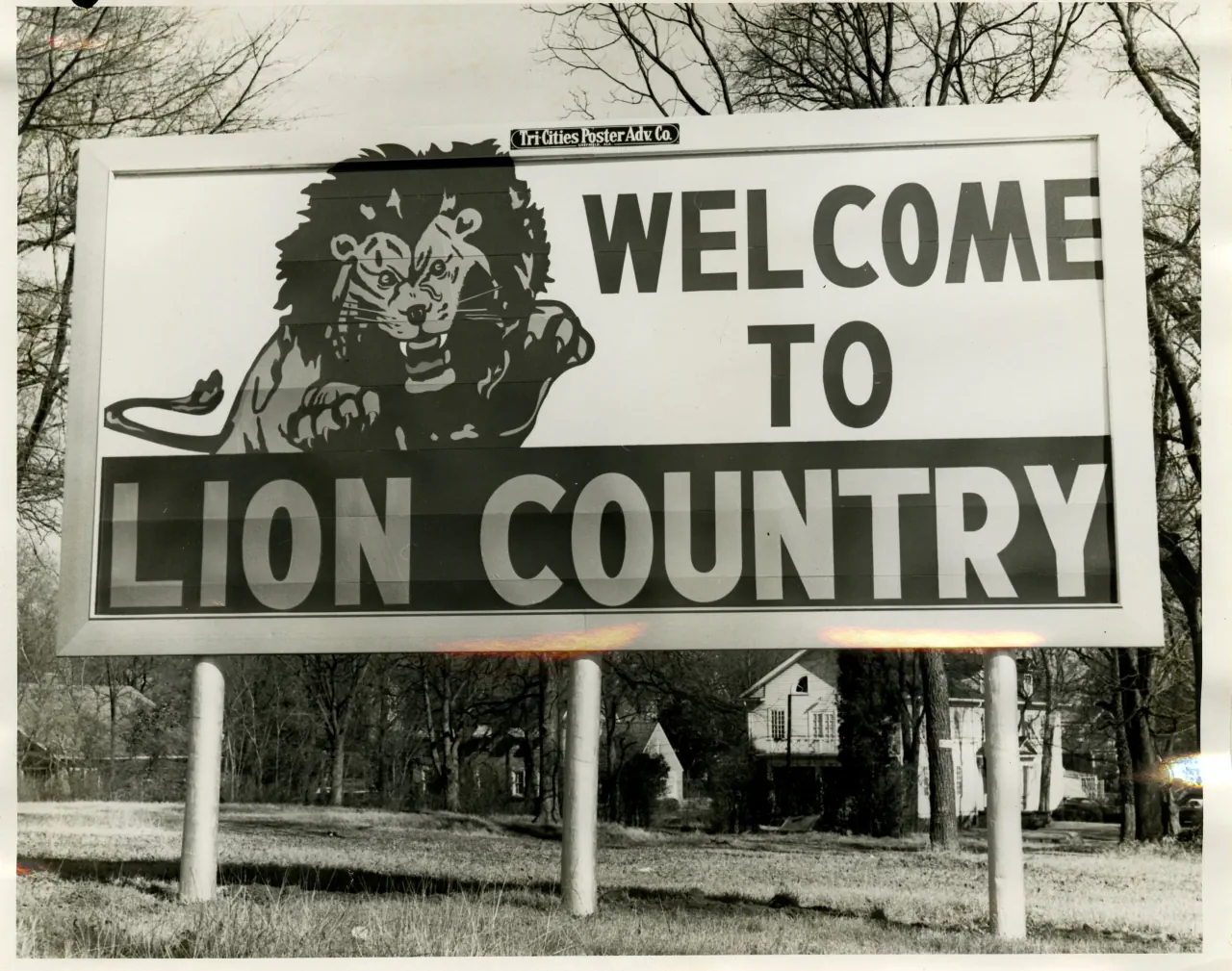
Lion Country
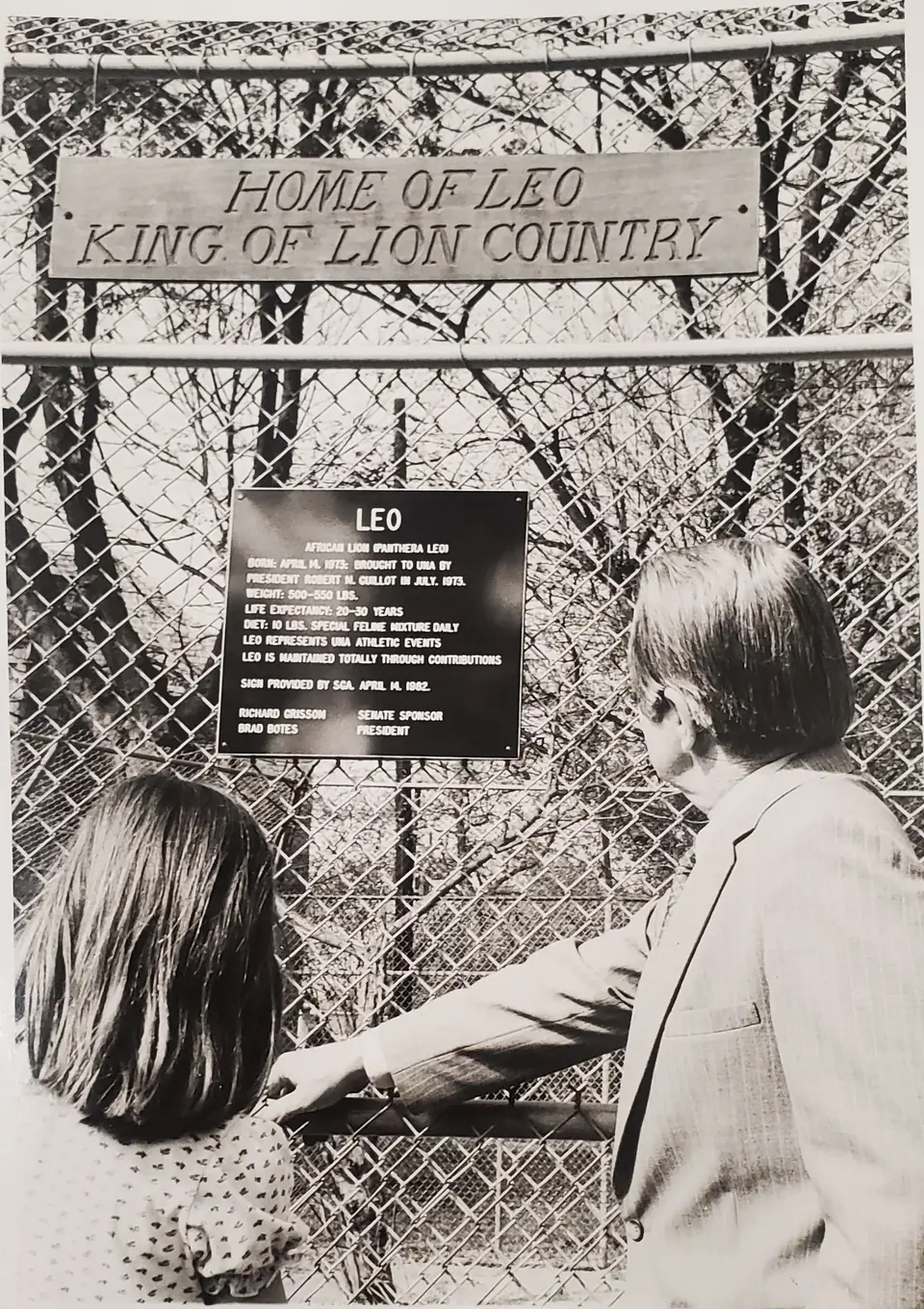
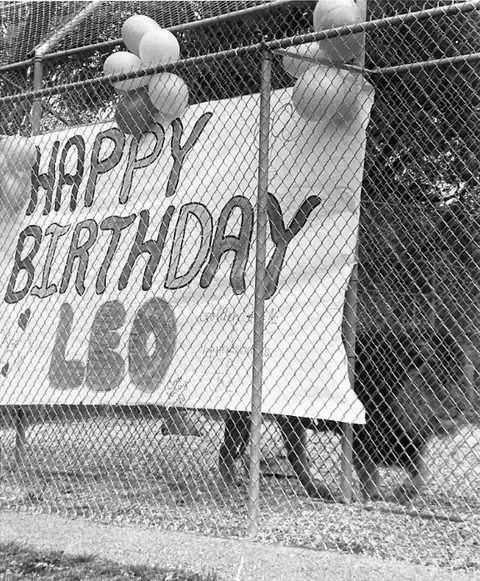
Leo the Lion has been the emblem of the college since 1949, and a costumed Leo first worked the crowd in 1961. In 1974 the University went further, and became the only school in the country with a live lion mascot living on campus.
-
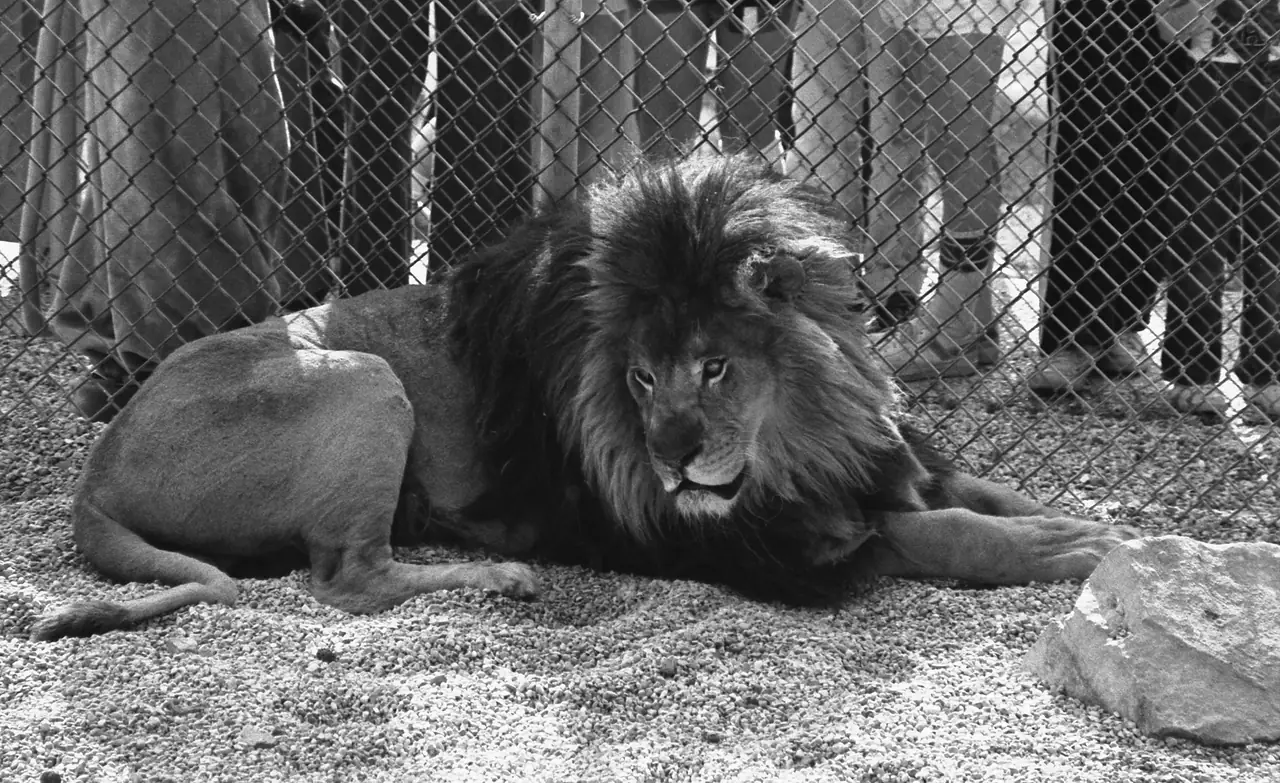
Leo I
Arrived 1974Until 1988
His arrival made UNA the only school in the country with a live lion mascot living on campus.
-
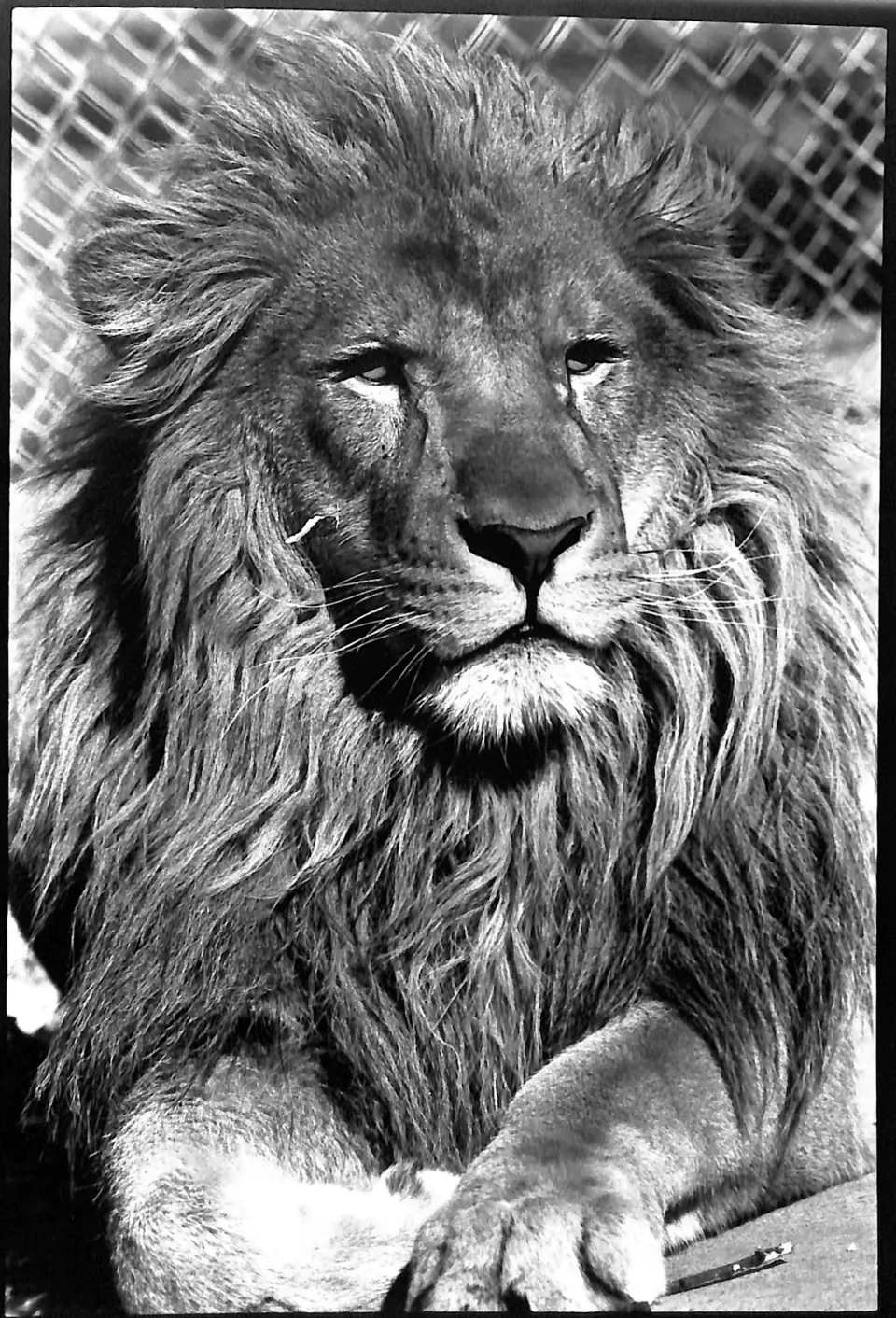
Leo II
Arrived 1988Until 2000
In 1997 Sports Illustrated named him the second-best mascot in the nation.
-
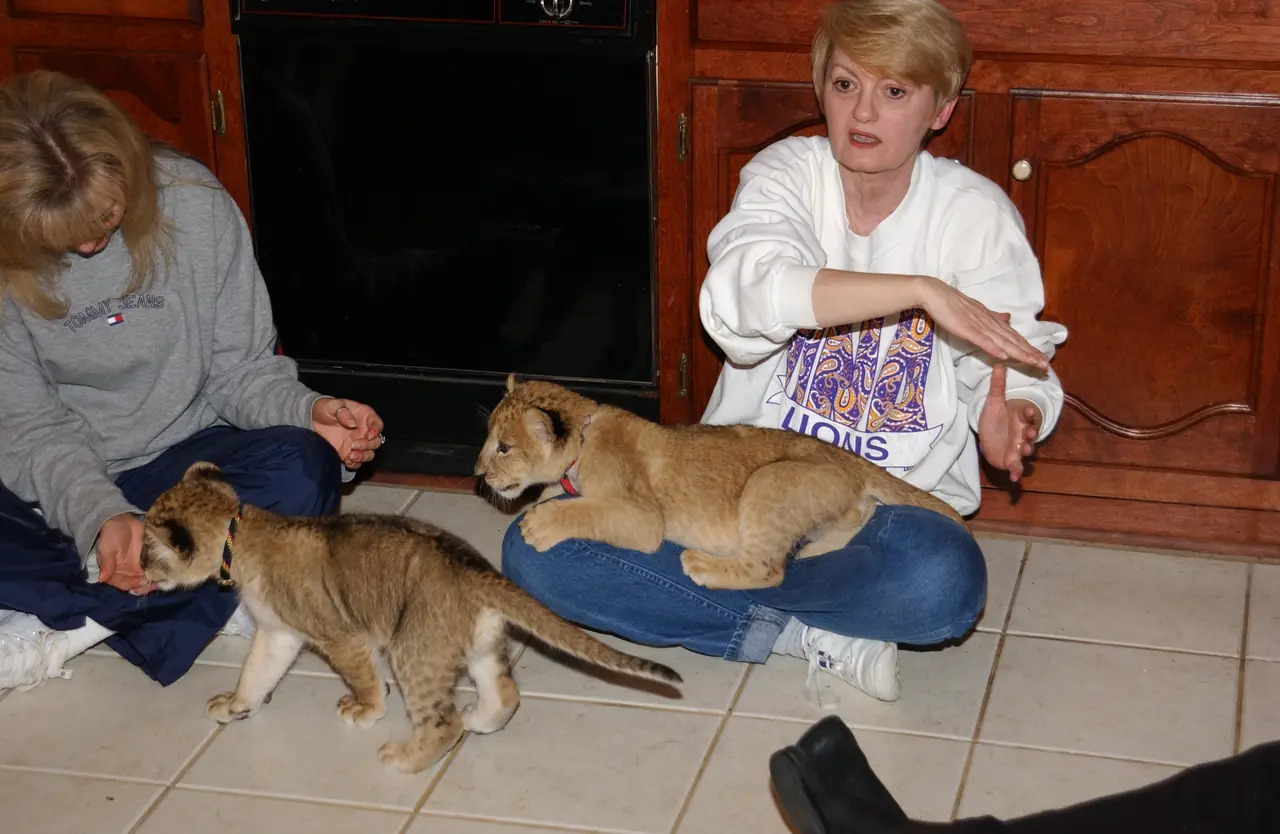
Leo III & Una
Arrived 2003Una until 2020Leo III until 2024
They arrived on campus together, as cubs.
Building a Legacy as a Forward-Thinking University
From 1974
The shift to a leading regional comprehensive university, under the University of North Alabama name: live lion mascots, national championships, the move to Division I, and the approach to the 200th anniversary.
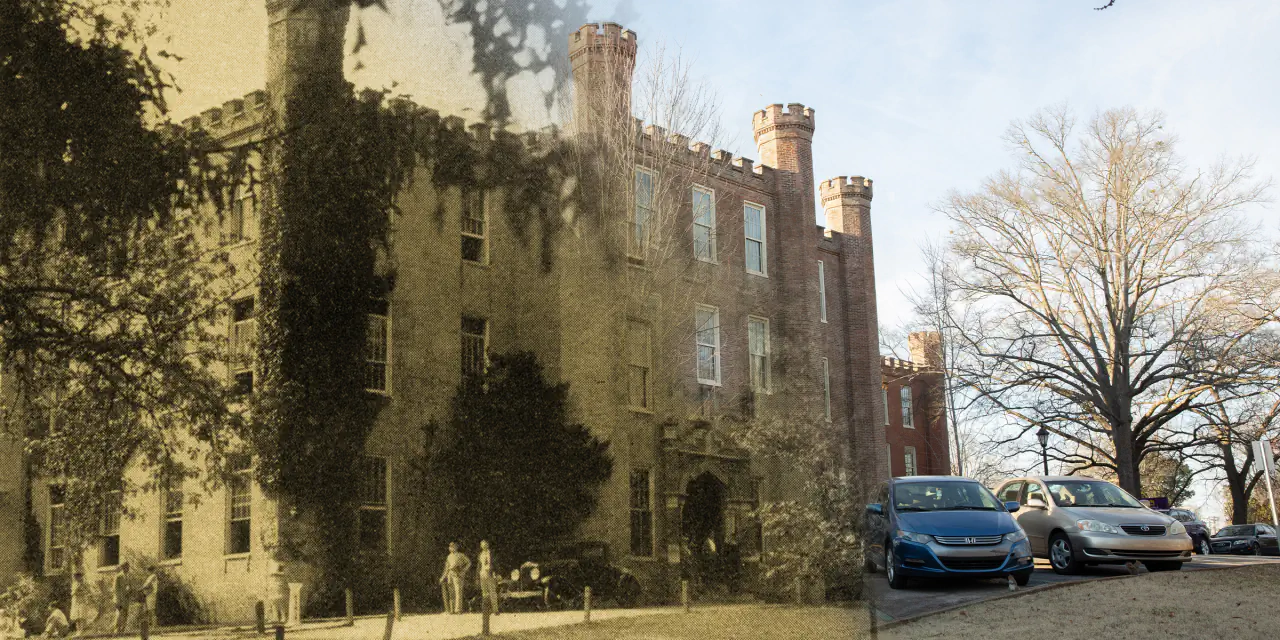
-
1974
- The Florence State Beauty Pageant is introduced as a preliminary Miss America competition.
- The name of the school is changed to the University of North Alabama.
- The women’s basketball team begins competing under the Association of Intercollegiate Athletics for Women.
- Wesleyan Hall & Rogers Hall are added to the National Register of Historic Places.
- Leo I arrives on campus, making UNA the only school in the country with a live lion mascot living on campus.
-
1976
- The first female athletic scholarship is awarded.
-
1978
- Stevens Hall is completed, becoming the home of the School of Education and School of Nursing.
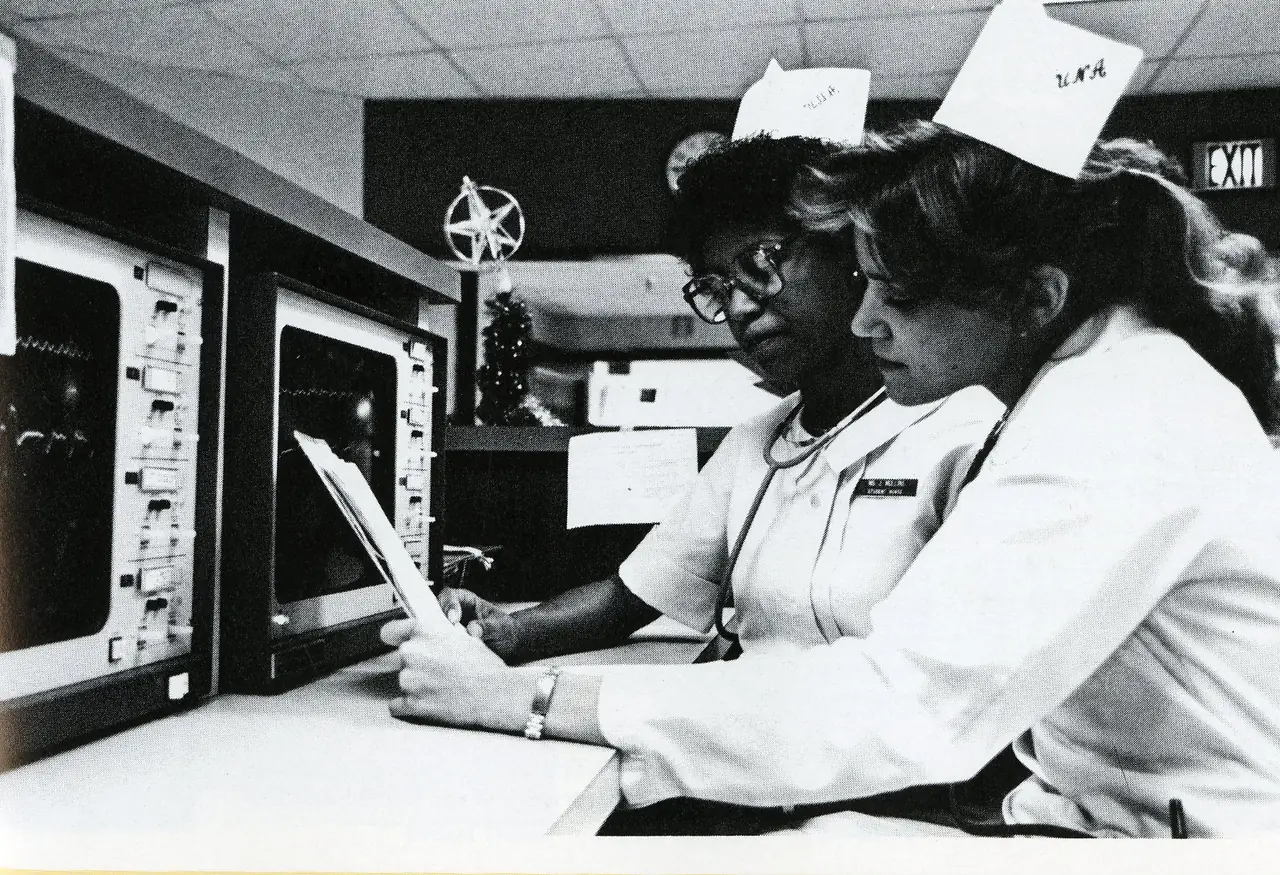
Nursing students, 1985 -
1979
- The Lions win their first NCAA Division II championship in men’s basketball.
-
1982
- The second addition to Collier Library is completed, and renovations to the original structure continue to make room for a computer center, which opens in 1984.
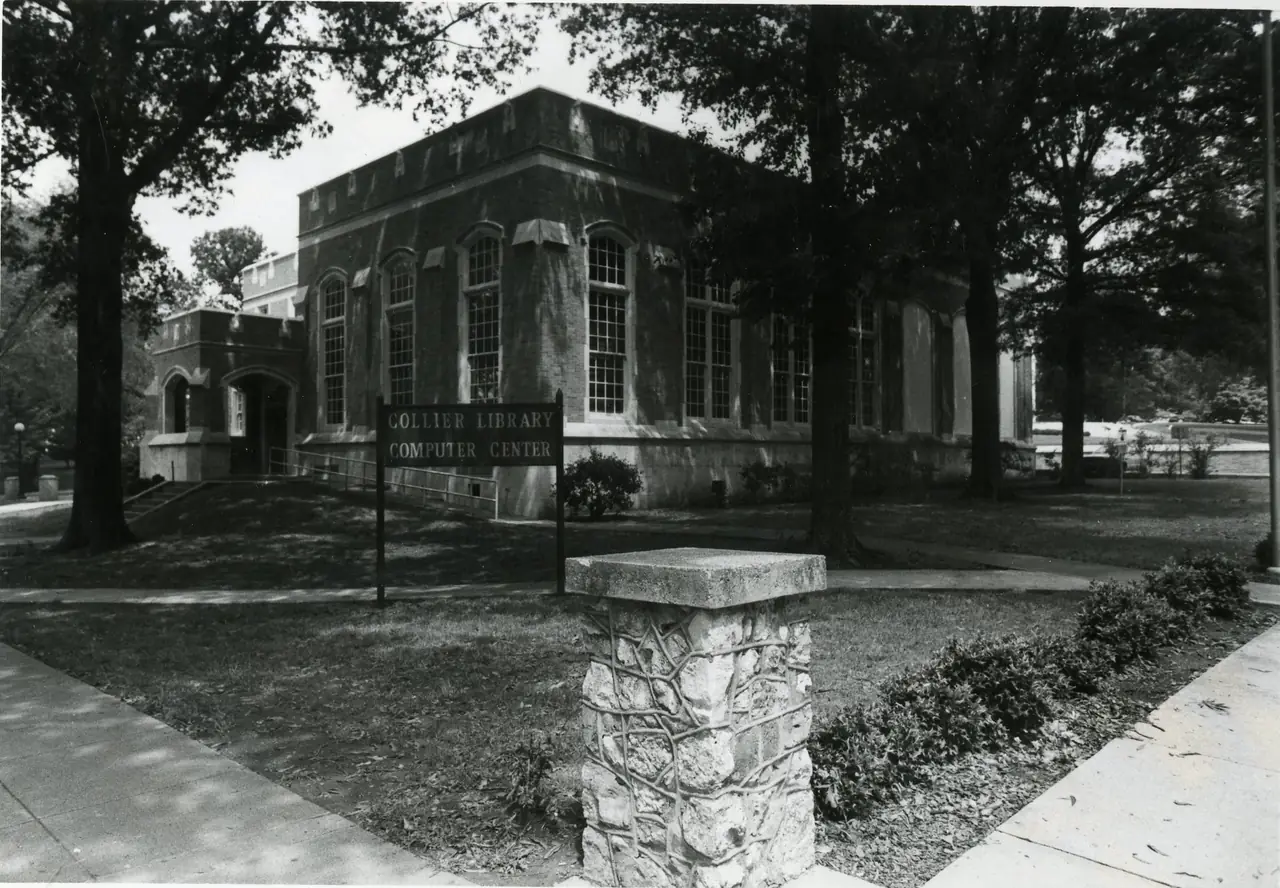
Collier Library and its computer center -
1983
- The UNA Women’s Softball program begins.
-
1984
- Flowers Hall Annex is opened.
- University Field opens for baseball.
- The first men’s and women’s cross-country teams compete.
-
1986
- Fast-pitch softball is introduced.
- Braly Municipal Stadium becomes the host stadium for the NCAA Division II Championship Football Game, a role it holds through 2013.
- The Harlon Hill Trophy for Division II College Football Player of the Year is created.
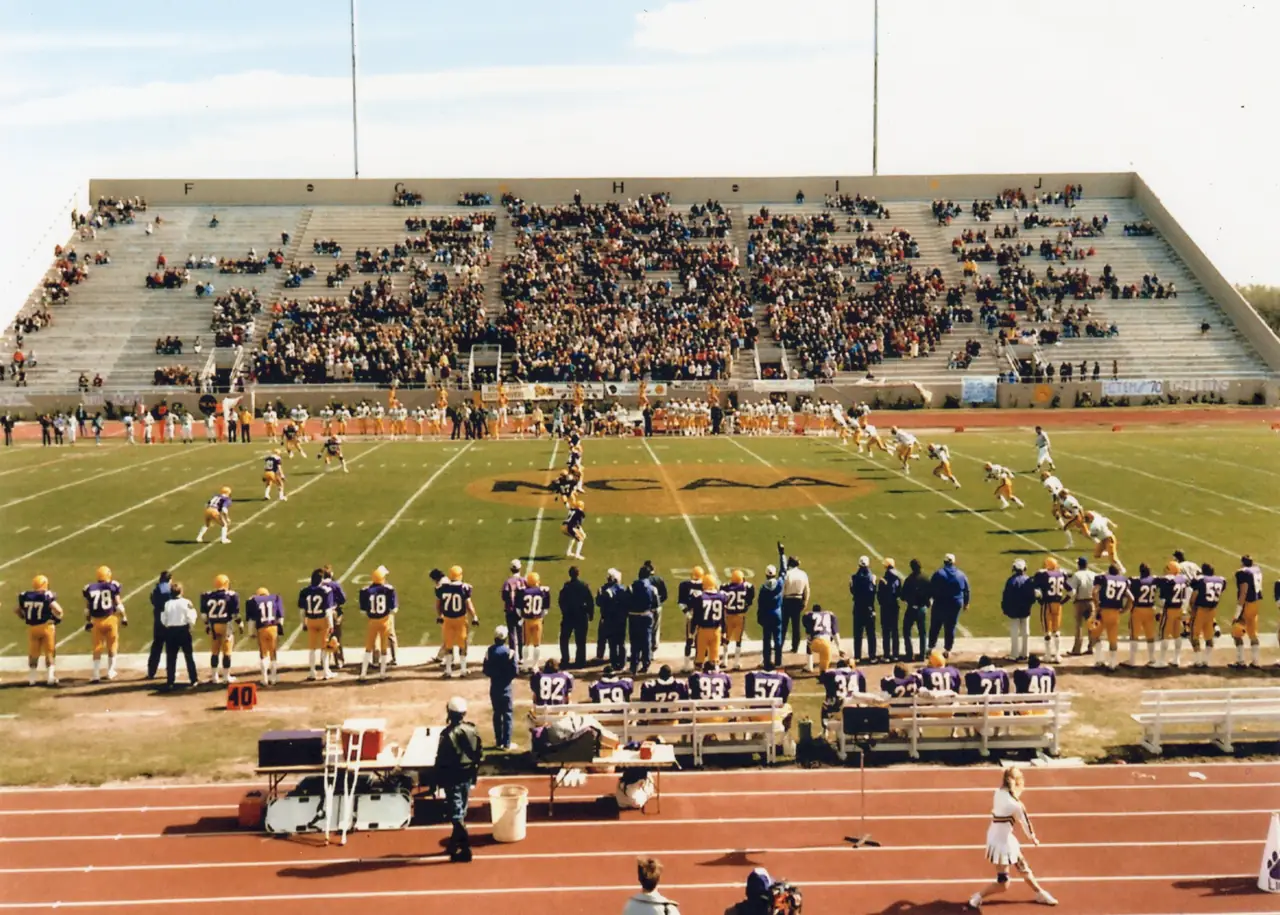
The Lions at Braly Stadium -
1988
- The Student University Center is completed and named the Guillot University Center.
- Leo I dies. Leo II arrives on campus in July.
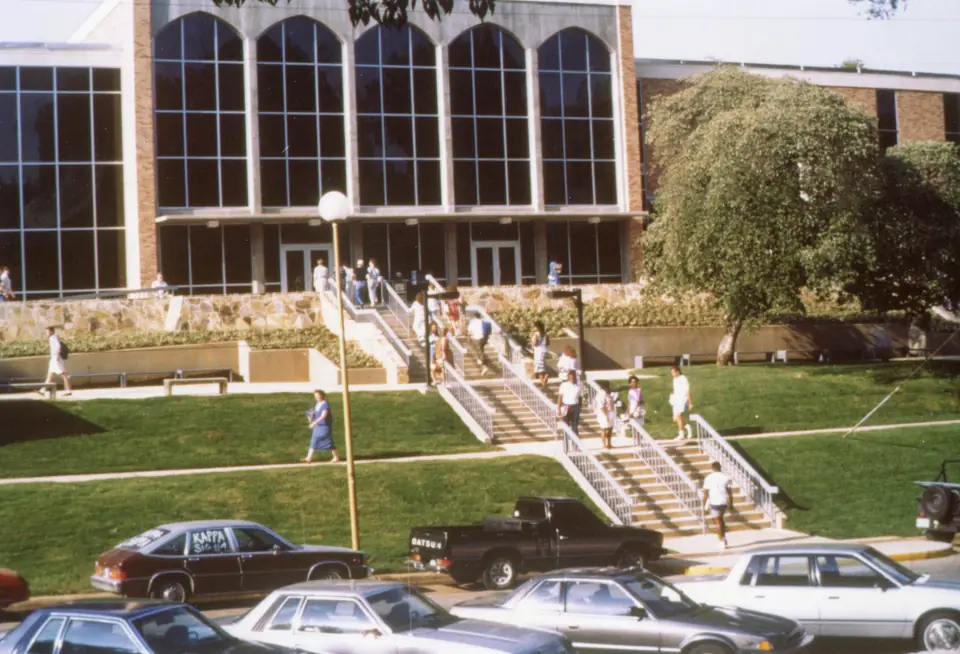
The Guillot University Center -
1989
- President Guillot retires, effective December 31st. Robert L. Potts serves in the interim period.
-
1990
- Robert L. Potts becomes the eighteenth president of the university.
- The UNA Athletic Hall of Fame begins. The first members selected are: Coach Eddie Flowers, Coach Hal Self, Harlon Hill, and Doyle “Dabbs” Earnest.
- The President’s home is converted into a campus guest house.
- Simpson House–Irvine Place is gifted to the university by David Brubaker in memory of his wife, Coby Stockard Brubaker, a native of Florence.
-
1991
- The men’s basketball team wins its second Division II National Championship, and Coach Gary Elliot becomes the first UNA basketball coach named Division II Coach of the Year.
- The first academic convocation for entering freshmen and transfers is held in the fall.
-
1992
- The President’s Cabinet, composed of business and community leaders, is formed.
- The University Seal is modernized, and the date 1830 is added in recognition of the school’s historic connection to LaGrange College.
-
1993
- A Master Facilities Plan is adopted to allow the University to grow to 10,000 students.
- The UNA football team wins the first of three consecutive NCAA Division II Championships, in 1993, 1994 and 1995.
-
1995
- The Victory Flame is rebuilt, and lit for the first time at the pep rally on October 27.
- Campus radio station WUNA/ROAR broadcasts on the campus cable system.
- Internet access becomes available for students on campus.
- Ronald McKinnon becomes the first UNA player, and the first defensive player, to win the Harlon Hill Trophy.
- The Lions are selected as “Best Team of the Quarter Century” in Division II, and Coach Bobby Wallace is named “Coach of the Quarter Century.”
-
1996
- The women’s soccer program is started.
- The Lions become the first Division II football team to visit the White House.
- UNA joins in the formation of the Higher Education Partnership.
-
1997
- Sports Illustrated recognizes Leo II as the second-best mascot in the nation.
-
1998
- The first annual George Lindsey Television and Film Festival is held.
- Enrollment surpasses 5,700 students.
- The MANE card (student ID) is introduced.
- UNA is voted the most outstanding new school in its region.
- Dr. E.B. Norton passes away on December 21.
-
1999
- The Lion Paws dance team forms.
- The UNA baseball team makes its first appearance in the Division II World Series.
- Braly Stadium undergoes major renovations.
-
2000
- The Raburn Wing addition to Keller Hall opens.
- Leo II dies.
- Robert Guillot passes away on November 15.
-
2001
- The new parking deck opens, and campus shuttle bus service begins.
- Commemoration ceremonies and programs are held for the September 11 terrorist attacks. Alumnus and former Lion football player Major Dwayne Williams was killed at the Pentagon that day.
-
2002
- UNA becomes a pedestrian-friendly campus. The Pedestrian Walkway is completed, including Harrison Entrance and Plaza, and the Opler Street Clock, fountains, statues and landscaping finish the Campus Facilities Master Plan construction.
- The “Campaign for Coby Hall” is initiated. Coby Hall is rededicated in June 2005.
- UNA purchases the old Appleby School building and Lions Gate Apartments.
-
2003
- Leo III and Una arrive on campus.
- The UNA women’s volleyball team wins the NCAA Division II National Championship, the first volleyball championship for any Alabama team.
- Construction begins on two residence halls at the Appleby location (Appleby East & Appleby West) and two near Rice & Rivers Halls (Covington & Hawthorne).
- The Industrial Hygiene program becomes only the 5th accredited bachelor’s program in that field in the nation.
-
2004
- The Student Recreation Center opens.
- The Board of Trustees authorizes construction of the softball complex at Cox Creek Park.
- President Potts resigns, effective June 30. Dr. Gary G. Warren, Dean of Information Technologies, is appointed interim president.
- Fall enrollment reaches 5,971 students.
- Smith Bell Tower, which holds the old Wesleyan bell, is dedicated.
- A runner from the UNA women’s cross-country team qualifies for the NCAA Division II Championships for the first time.
-
2005
- Dr. William G. Cale, Jr. is selected as the nineteenth president of the university.
- The President’s home is renovated to serve as the presidential residence.
- Fall enrollment surpasses 6,000 students.
- The UNA Honors Program is initiated.
- Powers Hall’s conversion into a center for the international student program is completed. Campus has over 400 international students.
-
2006
- Fall enrollment nears 7,000 students.
- UNA is designated a Literary Landmark in honor of author and alumnus T.S. Stribling.
- The former Powell School is purchased from the Florence school system and renamed the University of North Alabama East Campus.
-
2007
- Rogers Hall is renovated to house the offices of University Communications, University Advancement, and Alumni Relations.
- UNA becomes the first 4-year public institution in Alabama to offer a baccalaureate concentration in Culinary Arts.
-
2008
- Football practice field and soccer field open. The baseball field is named Mike D. Lane Field in honor of Coach Lane’s 25-year coaching career.
- The golf team wins its first Gulf South Conference Men’s Golf Championship.
-
2009
- Flowers Hall Annex is renamed the Henry Harold Self Field House in honor of the late Lion football coach & athletic director.
-
2010
- The Chronicle of Higher Education ranks UNA among the 28 best four-year colleges in the nation to work for.
-
2011
- Construction begins on the George S. Lindsey Black Box Theatre. Its performance hall is named after Lindsey’s friend, actor Ernest Borgnine.
- The UNA Board of Trustees approves a resolution to take UNA to the Division I level in athletic competition, contingent upon an invitation to membership from a Division I conference.
-
2013
- Construction begins on the new science and technology building, later named the Mitchell Buford Science & Technology Building.
-
2014
- The Commons opens, later named the Wendell W. Gunn University Commons.
- For the fifth time in school history, UNA wins both the Gulf South Conference football and men’s basketball championships in the same year.
- Ground is broken for two new residence halls on the north end of campus (Olive and Mattielou Halls).
- President Cale announces his retirement, effective July 1. Dr. John G. Thornell is appointed Interim President.
-
2015
- Dr. Kenneth D. Kitts is named the twentieth president of the university.
- A “live on campus” requirement for entering freshmen begins with the fall semester.
-
2016
- UNA Softball wins the NCAA Division II National Championship.
-
2018
- UNA transitions to Division I athletics, entering the Atlantic Sun Conference.
-
2020
- Una, the lioness, passes away.
-
2021
- Laura M. Harrison Hall is completed, housing the Anderson College of Nursing and Health Professions.
-
2024
- The Computing and Mathematics building is completed.
- Leo III passes away.
-
2025
- Men’s basketball wins the Atlantic Sun Conference regular season.
- UNA tennis wins the Atlantic Sun Conference regular season and makes a postseason appearance at the championships.
-
2026
- Bank Independent Stadium opens for the first on-campus football game in school history.
-
2030
- The University of North Alabama marks 200 years since the founding of LaGrange College in 1830.
Campus life
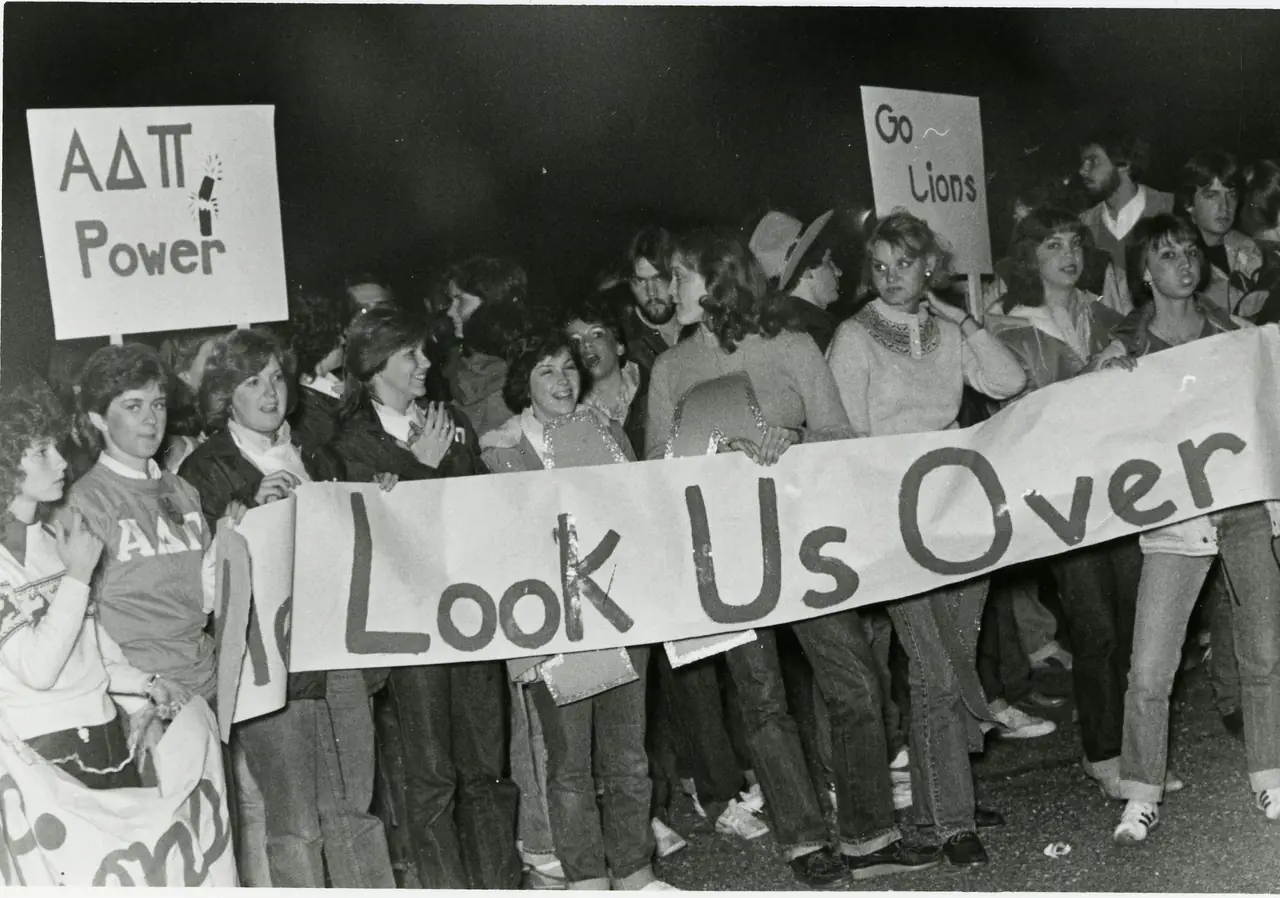
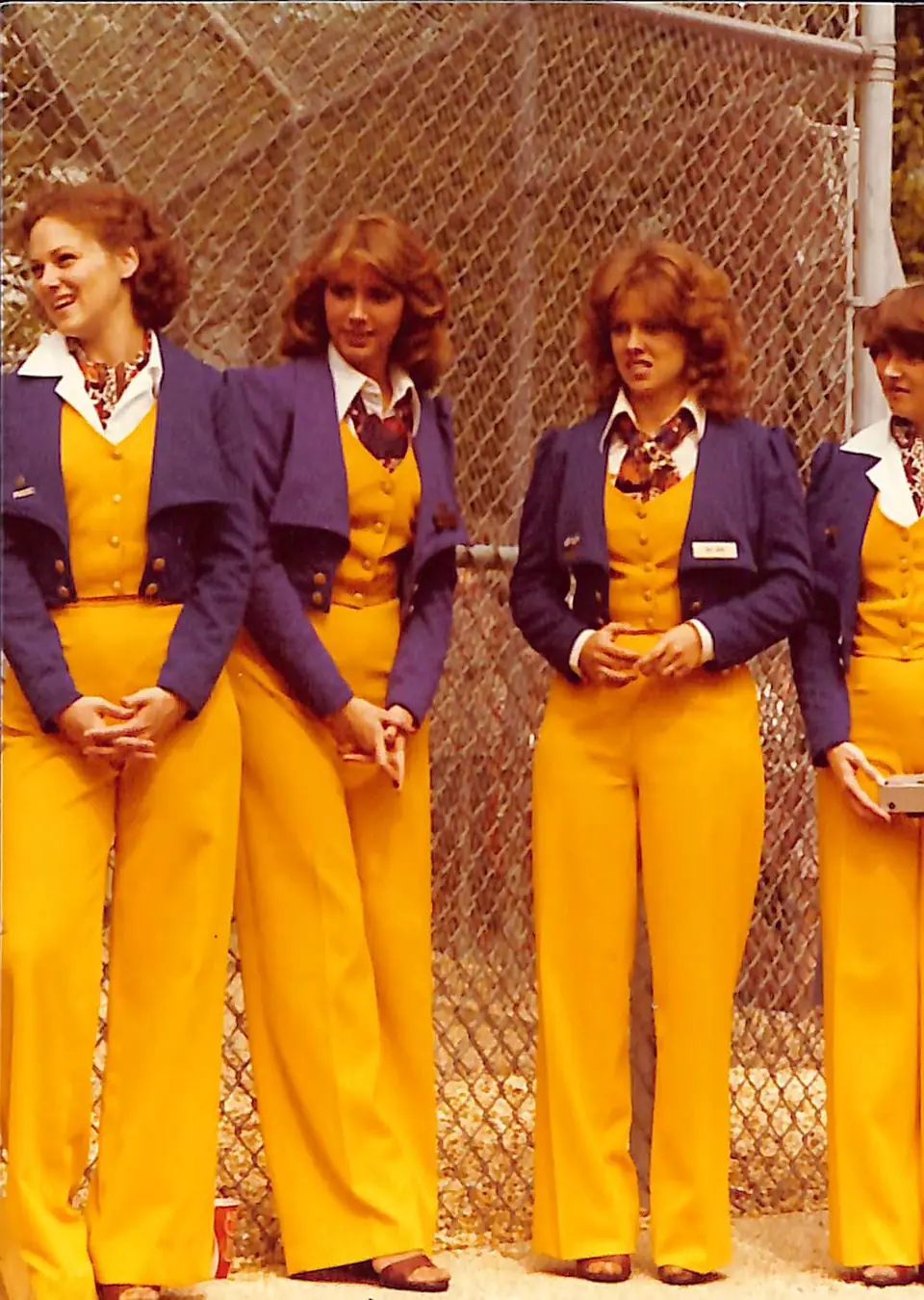
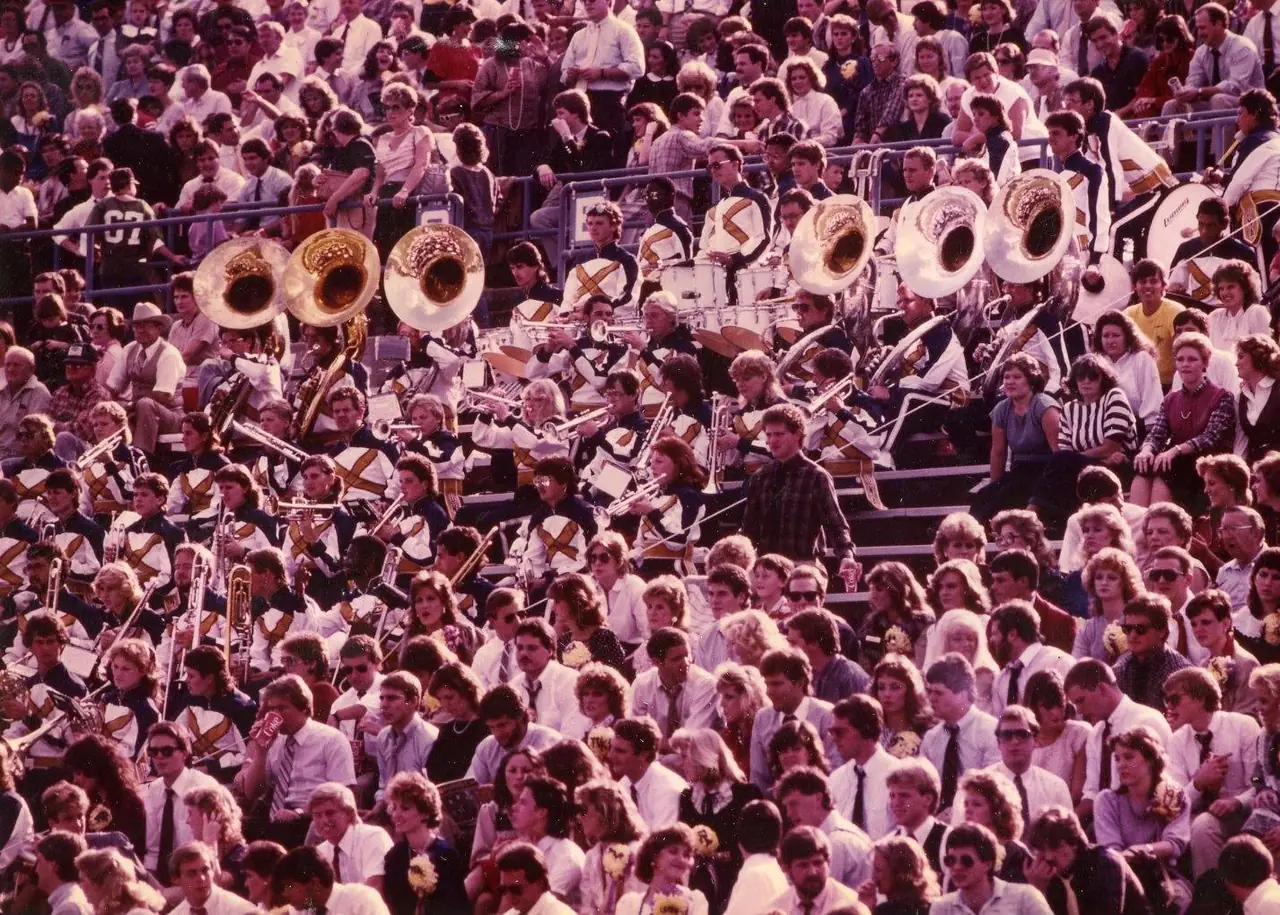
Five of these moments, one from each era, lead the homepage timeline.